30 Women Novelists You Should Know – #29 Jane Summer

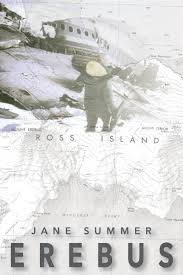
Erebus cover

The most remarkable book I read in 2015 is Erebus by Jane Summer. To be clear, it isn’t exactly a novel, as it is written with line breaks and rhythms like poetry. But it isn’t exactly poetry, as it contains dialogue, excerpts from official reports, photos, maps, newspaper headlines and even a dental record.

A new kind of book

It is a new kind of book about an old and aching loss, the death of the author’s beloved friend in a still-unsolved airline disaster, when a New Zealand Air jet smashed into Mt. Erebus in the Antarctic during a sightseeing flight in 1979.

“Despite our best intentions,” Summer writes, “we forget the dead. Do they forget us?” She has never forgotten her friend Kay, who died instantly at age 29, along with her mother and 255 other sightseers, when their airplane met the mountain at 450 miles per hour.

Shards and splinters

Summer builds her story seemingly of shards and splinters, but somehow with these slicing fragments she constructs a robust narrative. We see the blossoming of the tender and intense connection between the two women, who meet as colleagues. “The rising /tide sends survivalists for higher ground. This woman, /Kay Barnick, is higher/ ground. I know it/ right away. / Like I know/ I’m sick/ of all the lies I tell.”

We meet Kay’s mother, one of the earliest women pilots, who convinces Kay to take this adventure in the air and then dies with her. We see the horrific crash, still New Zealand’s worst national disaster, and learn with scientific precision what happens to the human body in a collision with such force. And Summer shows us, with a calm accretion of facts, the corporate malfeasance that almost certainly caused the crash, and the cover-up that shielded the corporation from accountability at the cost of family members’ anguish.

Brace for impact

Certain lines repeat at unexpected moments throughout the text, achieving a different meaning and resonance each time. “Make the worst of what you’ve done/ luminous,” and “What does death do/ but make of someone three-dimensional two?”

“Brace for Impact,” one of the sections is called, and it could be a description of the whole book. Evocative and unsettling, Erebus lets you glimpse the icy landscape of the Antarctic and the equally unforgiving landscape of loss, the moonglow of friendship tinged with regret. We can never know who the dead might have been, and who we ourselves might have become if they had not left us.

The fine print

Jane Summer is a friend of mine. We met in college, both struggling to figure out how to make a life out of writing, and remain friends although we have never lived in the same city and years pass between our meetings. Don’t let that convince you to pass up this powerful reading experience.

If Erebus is a literary hybrid, but mostly poetry, why is Jane Summer one of the 30 women novelists you should know? Her previous book, The Silk Road, is a lyrical novel about a teenage girl living in a suburb called Hell, whose first love is an elegant older woman who drives an equally elegant car. The novel was recently released as an audiobook.

The Silk Road cover

30 Women Novelists You Should Know – #28 Natalie S. Hartnett

Natalie S. Harnett

The Hollow Ground by Natalie S. Harnett presents several views of hell. The hell of craving to be loved in ways your relatives cannot manage. The hell of struggling to get by economically as hopes and options dwindle to nothing. Most of all, the hell of living in a plundered landscape where mining companies have gouged the ground hollow and made the earth’s thin crust rage with sink holes, poison gases and underground fires that cannot be extinguished.

The novel’s narrator, Brigid Howley, is eleven years old, going on forty. In her matter-of-fact way, she tells us about her life and that of her family, a white Irish-American clan in the Pennsylvania coal country that she believes has been cursed for generations either by a priest’s malediction or by their own bad choices and worse luck.

Sinkholes and secrets

Brigid’s beloved father, a miner like all the men in his family, was injured years ago in a mysterious mining disaster that took the life of his brother. Brigid also has a beautiful, prickly mother and a baby brother. In 1961, the family is living with a great-aunt until a sinkhole sucks her under and turns her house uninhabitable.

The Howleys have to move in with Daddy’s mother and father in the even more bleak and ecologically devastated town of Barrendale. There Brigid makes a best friend and discovers the body of a murdered man, a crime that brings to light all the secrets, blame, guilt and longing that have roiled under the surface of her family for years.

Upending my expectations

The Hollow Ground upended all of my expectations. Before I opened the novel I had just finished a powerful book that still had me slightly under its spell, so I expected to read a good bit of The Hollow Ground before it fully won my interest. Nope. By the time I had read the prologue – less than a page long – I was utterly absorbed.

The prologue begins, “We walk on fire or air, so Daddy liked to say,” and ends with this: “I’m just saying that sometimes what we seek is something we hope, with all our blood and bone, we’ll never find.” Who can resist such an opening?

I generally don’t like child narrators, and expected Brigid to be equally problematic, either too cute or preternaturally wise. She is neither. Brigid Howley is a unique character with an original narrative voice that is brushed with rough poetry. In fact, every character in the novel – from the members of the Howley family to the women who work in the mill with Brigid’s mother to the detective who investigates the murder – is clear-cut, full-bodied and memorable.

A monstrous crime

But the star of the novel is the earth, exploited and abused by the coal companies until it no longer resembles the planet we know. “Steaming green lawns in the dead of winter.” A character “would talk about which part of her basement was too hot to touch and how many tomatoes had ripened in what should have been the frostbitten ground in her garden.” To me, the murder mystery that creates one strand of the novel shrinks to insignificance in the face of the monstrous crime committed by the coal companies against the land and all the families who live on it.

Most striking was the way the characters and their entire communities take the devastation in stride. When they learn that an inspector needs to test the air in each house in the middle of every night so they don’t suffocate in their sleep, the local families simply leave the door unlocked for him. “They [the coal companies] don’t care how many houses and families they wreck,” Brigid’s grandmother declares, “as long as they get every last flake of coal down to the bedrock.”

Unforgettable

This is a novel that creates an unforgettable world teeming with full-bodied characters. Each page rewards the reader with some new insight, character revelation or bit of fresh, distinctive language. Once you read it, you won’t be surprised to learn that The Hollow Ground, published in 2014, won both the John Gardner Fiction Book Award and the Appalachian Book of the Year Award for Fiction.

Get a free copy of The Hollow Ground

The paperback edition of The Hollow Ground was just published in August. I’m happy to have a copy to give away. There are two ways to toss your name in the hat to win a copy.

You can contact me through this blog and let me know you’d like a copy.

Or better yet, you can sign up for my newsletter to be eligible to win this and other free books by women writers.  When you receive the newsletter, just hit reply and tell me which book you want.

I’ll choose a name from those who contact me. (Sorry, I can only ship to U.S. addresses.) I hope you will appreciate this new voice in literature and look forward, as I do, to future books by Natalie S. Harnett.

Hollow Ground cover

The real thing

Photo: Chris Banigan

Photo: Chris Banigan

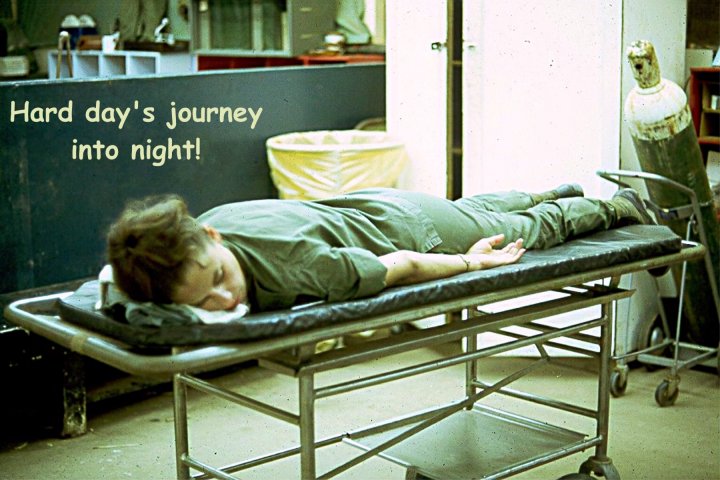
When you write a novel about a nurse who served in Vietnam – based entirely on research and imagination – it’s a thrill to receive a letter from a real Vietnam veteran nurse telling you what she thought about the book. I received such a letter last week. 

I don’t know the nurse, or even her name. She sent the letter to a friend, who sent it to another friend, who forwarded it to another friend, who sent it to me. (Interestingly, all of the women in this friend chain are named Susan.) I’m sharing the letter with the writer’s permission.

Oh, and that exhausted nurse in the photo? That’s not the letter writer. (At least, not as far as I know!) The photo was taken by the late Capt. Chris Banigan, during one of her two tours of Vietnam. (You can see more of her photos here.)

Enjoy the letter.

Her Own Vietnam] brought back many memories. My experience was better than many nurses simply because I was a newlywed who followed her husband, and the armies were standing down. I was opposed to the war before I joined the Army and participated in the 1969 anti-war rally in DC. (See Forrest Gump.) However, I always supported the troops.

I remember the [draft] lottery and flying over [to Vietnam] in summer greens and pumps on a commercial flight. You know you’re going into a combat zone when they make sure your dental records are updated to ID you in case of death, and you travel to your base in an armed convoy.

My husband and I were stationed together. He worked in a drug treatment center while I was in the medical wing of the 24th Evacuation Hospital [in Long Binh]. I truly have mostly good memories about my experiences: the soldiers from the bush who loved seeing “round-eyed” girls, our colleagues from all over the country, the general who allowed a best friend to stay with his dying buddy. Even Bob Hope came.

We did, however, have an armed guard at our (air-conditioned) barracks – not to defend against the Viet Cong but to keep the drunk GIs out. I was only accosted once.

We worked 12 hour shifts 6 days a week, and I was especially tired as I got pregnant (oops) the night I arrived. I, too, felt I could keep my brother out of Vietnam by being there.  I met a private in personnel who had served several tours just to keep her brothers safe.

I was found out during routine drug screening (I think they did pregnancy tests on all the women) and med-evaced out of the country and forced to leave the Army. There were several of us pregnant women on the plane (where one of the Air Force nurses was wearing a maternity uniform!) but the vast majority of the patients were drug addicts. Quite different from the protagonist’s experience, and I certainly experienced no PTSD.

The absolute hardest thing was to leave my husband in a combat zone. I was afraid one of us would die and the baby would be the only remembrance for the survivor. Luckily, he came home six weeks early in time for her birth.

Like the author, I was totally opposed to the Iraq war. It’s easy to support something in which you make no sacrifice. It all seemed like more useless death and maiming.

At any rate, thank you so much for the book. It was a good read, and I felt drawn back to my five months in country.

Free books!

Congratulations

Congratulations to B.M. of NY and I.T. of DC, who got free copies of The Angel of Losses by Stephanie Feldman.

Angel of Losses

Now’s your chance

Coming up next: a giveaway of the gripping novel The Hollow Ground by Natalie S. Harnett. I’ll review the book here later this month. You can enter your name in the giveaway either through this blog or through my newsletter, Being Bookish

You’re going to want to read this book.

Hollow Ground cover

Black Lives Matter to White People

Sandra Bland Photo: Facebook.com

Sandra Bland
Photo: Facebook.com

This is for my fellow white Americans. If you are white and consider yourself a feminist, or a liberal, or a progressive, or simply a good person, this is for you.

Haunted

I have been haunted this week by the death of Sandra Bland, a 28-year-old African American woman who was pulled over by police in Texas for failing to signal a lane change, and three days later found dead in a jail cell.

Her death – following so many other black women and men, girls and boys, who have been killed by police – gave rise to a horrifying new Internet theme: If I Die in Police Custody. For example:

– Know that they killed me. I would do everything in my power to get home to my family. (From @reignofapril)

– Don’t let them tell the world who I was. You tell the world who I was. (From @the4th_duck)

This year alone

It has been one year since Eric Garner couldn’t breathe.

Eleven months since the body of Michael Brown lay uncovered for hours on a street in Ferguson.

Eight months since Tanisha Anderson died in Cleveland as a result of police restraining her so brutally that her death has been ruled a homicide.

Three months since 25-year-old Freddie Gray, shackled and helpless, was flung around in the back of a Baltimore police van until he was mortally wounded.

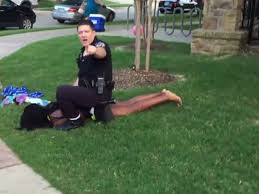
One month since 14-year-old Dajerria Becton was thrown to the ground and forcibly subdued by a police officer at a Texas pool party.

One week since 18-year-old Kindra Darnell Chapman in Alabama was found dead in her jail cell only minutes after she had been locked up.

Why is all this just now happening? It’s been happening. White people are just now noticing.

Police officer manages to subdue 14-year-old girl at a pool party. (Photo 10News.com)

Police officer manages to subdue 14-year-old girl at a pool party. (Photo 10News.com)

What can we do about it?

What can we, the good white people of America, do about it? If we are not police officers or public officials or in a position of power? If we are busy with our own lives and struggles?

I am no expert, and I have no sweeping solutions to offer. But here are five suggestions of things we can each do in our own lives.

1. Connect the dots

This summer nine African American people were massacred in their South Carolina church by a white supremacist who had no trouble finding inspiration and affirmation in the world around him. Seven African American churches have been burned to the ground, and numerous female pastors have received death threats. The President of the United States has repeatedly been greeted by protestors waving Confederate flags.

And this summer we learned that for the first time, the number of African American children living in poverty in the U.S. has exceeded the number of white children living in poverty, despite the fact that white children outnumber black children by three to one. (Why any children should live in poverty in the world’s richest nation is another matter.)

These things are not unrelated. They are part of a system – a belief system, a values system, a political system, an economic system – called racism. You and I, white friends, are a part of this system whether we like it or not.

2. Educate yourself

I am not a racist. But I know it’s in me. And I know the system of racism eases my life like a strong breeze always at my back. Like a breeze, the system can be invisible to those it benefits. That’s why it’s important for white people to educate ourselves.

For me, the best way to do this is to listen to other people, particularly people of color, and to read. Here are a few suggestions:

“I, Racist” by John Metta (article)

“I am Jewish and Black Lives Matter” by Rabbi Stephanie Kolin (article)

“The Case for Reparations” by Ta-Nehisi Coates (article)

Color of Change (website)

Center for Community Change (website – and full disclosure, I work there)

Sister Citizen by Melissa V. Harris-Perry (book)

The New Jim Crow by Michelle Alexander (book)

Between the World and Me by Ta-Nehisi Coates (book)

3. Participate

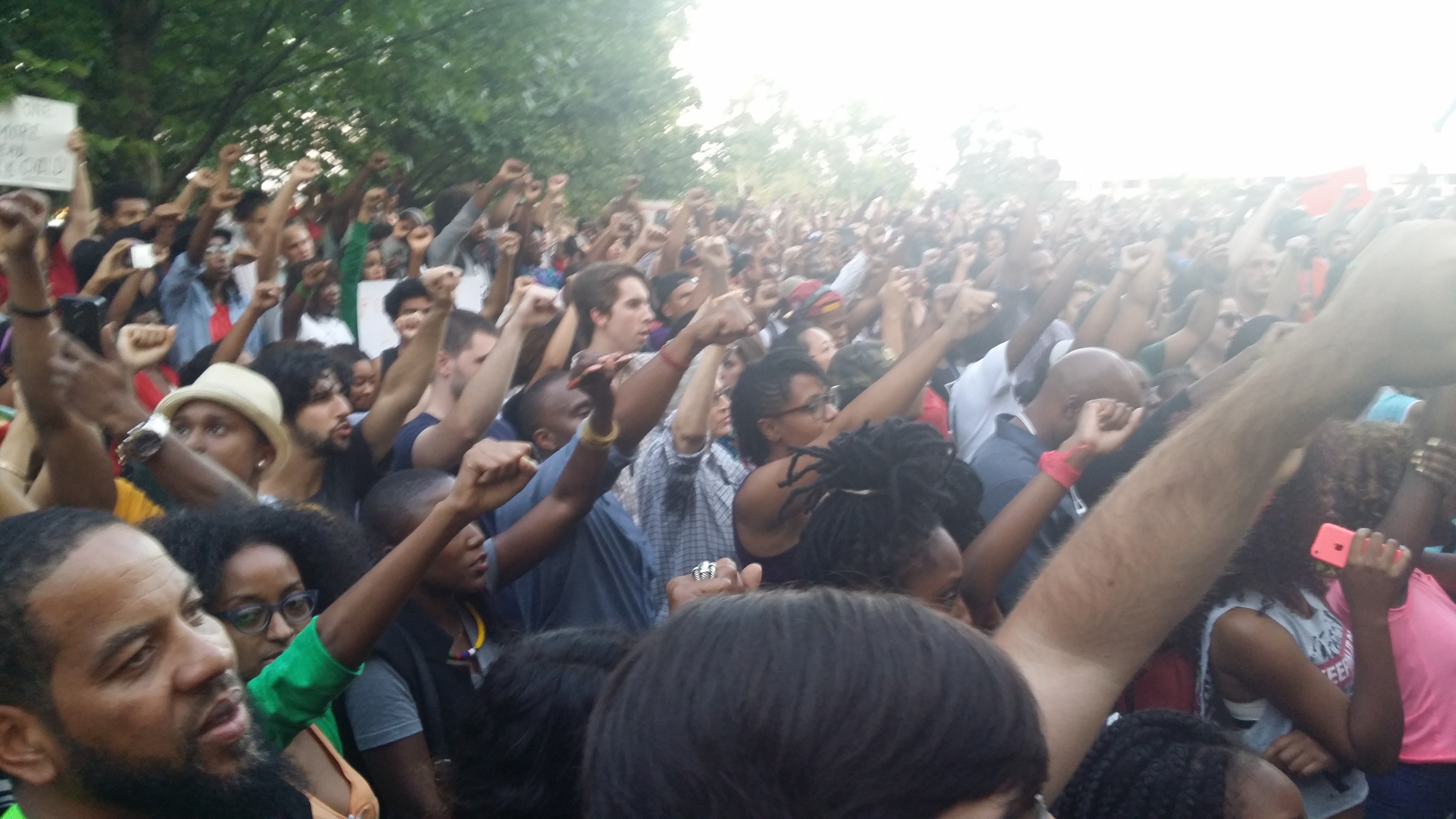
If you can get to marches, rallies or demonstrations for racial justice in your area, join them. If you’re lucky enough to live in a place where there’s ongoing organizing or activism on racial issues, bring your own spirit and energy to the fight. Collective action isn’t radical, it’s one of the ways people speak up in a democracy.

See the white-harked white woman in the middle? That's me. It's easy and inspiring to take action together.

See the white-haired white woman in the middle? That’s me. It’s easy and inspiring to take action together. (Photo: Derek Johnson)

If you can’t join an event, create one. A candlelight vigil on your block. A book party to discuss one of the books above. Some way that’s doable for you to pull people together – even or perhaps especially white people – to examine how race works in our country and to bring about change. Racism is enforced by so many practices and policies, it will require all of our voices and hands to dismantle it.

4. Confront

Okay, this one is hard. When you see or hear racism from other white people, say something.

Obviously you should keep your own safety in mind; I’m not urging you to confront the raging demonstrator waving the Confederate flag. I’m encouraging you to object to the next racist joke you hear, to inform your uncle that his disparaging comments aren’t welcome at your table, to call your friend to talk about her racist and possibly clueless Facebook post.

I’ve done this several times. It’s always excruciating, and it never ends well. No matter. It needs to happen – and maybe you’ll be better at it than I am.

In theory, I try to give people the benefit of the doubt. We white people are so used to living and breathing racism that we may not even be aware of it. Perhaps if a friend or relative gently but firmly points out the racial harm in something we’ve said, we might actually think about it and consider a different perspective.

Unfortunately, I have trouble being kind but firm. I am more likely to be caustic and withering. This tends to offend the offender and, in social situations, the host. It may not lead to the thoughtful examination I aim for – but at the very least, one white person hears another white person declare that what they just said is not acceptable. It’s a start.

5. Open yourself to some pain

I am a white feminist who began a life of activism during the second wave of the women’s movement. In recent years I’ve seen a lot written about the shortcomings of our movement – then and now – when it comes to race and women of color. I’ve seen even more written about the failure of white progressives to truly grapple with race.

It hurts to read these things. My first reaction is, “Yes, but – “ I want to defend myself from pain, from other people’s (or my own) poor opinion of me and my actions. How can they think that about me, when my heart is so good?

I need to stop that.

Racism exists. It exists to benefit me and people like me. Maybe I didn’t build it. Maybe I didn’t want it. But I profit from it daily.

I can only dimly imagine the experience of suffering under racism. Of never feeling safe in the world. Of knowing that your radiant, open-hearted children will have to face that constant battering of the soul, will have their lives made smaller and more difficult and perhaps cut short.

It’s not easy to think about this. It’s not easy to read some of the materials I’ve suggested above. It’s not easy to talk openly with African American friends, and to know that they may not feel safe talking openly with me. But if we want to confront racism in our country and ourselves, the last thing anyone can worry about is whether it will bruise white people’s feelings to hear the truth.

So fellow white people, brace yourselves. This is going to hurt.

Extra credit – give money

If you can, make a contribution to one of the scrappy, underfunded grassroots organizations fighting for racial justice. Better yet, set up a monthly contribution that the organization can count on, even if you can only give a small amount each month.

It’s easy to give money if you can spare it – certainly easier than some of the previous suggestions. It’s also one important way that white people can help balance the scales. For context, check out this article by my friend and former co-worker Sean Thomas-Breitfeld on “Why it’s easier to raise money to fight disease than to fight racism.”

There are many admirable organizations to choose from. Here are a couple that I’ve given to lately.

https://thirdwavefund.giv.sh/7cdc

http://blacklivesmatter.com

How to be a good white person in America

I am still struggling to figure out how to be a good white person in America. Maybe you are too.

There are white people in the South who laughed and ate picnics under the dangling feet of lynched African American women and men. There are white people in Boston and Chicago who bared their teeth and hurled stones at African American children on their way to school. I know I’m not one of those.

But there are also millions of white people who turn away, who don’t speak up, who won’t take action, who think racism isn’t their fault or their concern. I don’t want to be one of those either.

Racism is not a Southern problem. It’s not a police problem. It’s rooted deep in the DNA of our nation, in how it was founded and financed. It flourishes in the laws and structures that isolate black people from power and security. And for white people, racism may live in the cobwebbed corners of our own minds and hearts, where even we are afraid to look.

Here, you hold the flashlight and I’ll grab the broom. Let’s go together. It’s time to get started.