Check out this cool interview by writer and book nerd G.G. Andrew! Featuring Mary Poppins, Tayari Jones and me.
Reading
Talking about books and writers.

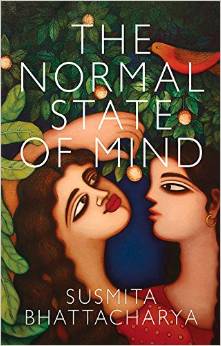
30 Women Novelists You Should Know – #25 Susmita Bhattacharya

Photo: parthianbooks.com
What is it worth to fit in? How do societies evolve, and what does it cost those who dare to push for change? These are among the questions Susmita Bhattacharya explores in her wonderful debut novel, The Normal State of Mind.
Hanging on the edges of society
In urban India during the last years of the 20th century, two women tumble off the small, flat world known as “normal life.” Dipali has been married for only three years when her beloved husband is killed in one of the terrorist bombings that have convulsed Mumbai. Far away in Calcutta, Moushumi has also found love, but in a dangerous place – the arms of another woman. She is exiled from her family and flees to Mumbai. There Dipali and Moushumi, both teachers, develop a firm friendship as they explore their shared experience of being “edged out into the border of society,” as Dipali puts it.
And what is it the young widow and the young lesbian have in common? It is the “lack of men in their lives” that in male-dominated and tradition-bound India leaves them “hanging on the the edges of society.”
Pain and politics
Dipali, for example, is politely invited to leave her cousin’s wedding party so her widowhood will not throw a shadow on the celebration. Instead of participating in the ceremony where the bride’s skin is covered in turmeric, she must content herself with munching on snacks in a separate room with the other widows, her mother and aunt. And despite being only in her twenties, Dipali is expected to remain true to her husband’s memory and never remarry.
The political context in which Mishoumi discovers herself as a lesbian reminded me more of the early 1960s in the U.S. than the 1990s, when Mishoumi’s story is based. She cannot find a model of the life she wants to live – a “normal,” open family life with another woman instead of a man. What she does find is ostracism, bigotry and violence from individuals and the state.
In a devastating scene, Mishoumi after years of separation finally finds the courage to call her family, only to have her father hang up on her. Later she drives past a movie theater and sees patrons running into the street, their clothes in flames. The theater has been fire-bombed with the audience inside, all for the sin of showing a movie about two sisters-in-law who fall in love with one another.
Two voices
The Normal State of Mind is narrated in two voices, Dipali’s and Moushimi’s, whose separate stories soon intertwine. I very much enjoyed the tactile details about life in India – the sounds, smells and tastes – and the insights into the lives of modern women. The novel begins with a funny and warm wedding-night scene in which both the husband and the wife – strangers mere weeks ago – face each other with no idea of what to do next and only Bollywood movies to guide them. The book ends with just the right touch of ambiguity, offering hope but no easy promises for either the women or their country.
A writer to watch
Susmita Bhattacharya, who says “My name is not easy to say even after a few drinks,” grew up in Mumbai, lived for several years in Wales, and now lives in Plymouth, England with her husband and children. I thought I felt the pang of the expatriate in her loving descriptions of Indian food, but that might have been my imagination.
Her short stories and poems have been published widely in the UK, but I believe The Normal State of Mind is the first piece of Bhattacharya’s work to be available in the U.S. I doubt it will be the last.
Get a free copy of The Normal State of Mind
Want a free copy of this excellent novel? There are two ways to toss your name in the hat to win a copy.
You can contact me through this blog and let me know you’d like a copy.
Or better yet, you can sign up for my monthly newsletter to be eligible to win this and other free books by women writers. I give away one or two each month. When you receive the newsletter, just hit reply and tell me which book you want.
I’ll choose a name from those who contact me, and if it’s yours The Normal State of Mind will soon be winging its way to you. (Sorry, I can only ship to U.S. addresses.) I hope you will enjoy this lovely and unusual book as much as I did.
Share this:

30 Women Novelists You Should Know – #24 Emily Gray Tedrowe

Like everyone of my generation, I’ve lived through several periods when the U.S. was at war. Then came a time, continuing to this day, when the U.S. was perpetually at war. Politicians launch these conflicts, and soldiers fight them. But when soldiers are injured, it is their families – mostly mothers and wives – who live ever after with the legacy of those wars.
Blue Stars by Emily Gray Tedrowe is the story of two such women, and it takes you deep into the world of tedium and terror that was Walter Reed Military Hospital in Washington, DC during 2005.
Two women who couldn’t be more different
Ellen Silverman is a literature professor, an opponent of the wars in Iraq and Afghanistan who holds George W. Bush and his entire Cabinet in contempt. She is the mother of a college-age son and daughter and the guardian – for all intents and purposes, the mom – of Mike, a young man who went to high school with her son. She is aghast when Mike tells her he enlisted in the Marines, but that’s nothing compared to her horror when he returns from Iraq grievously wounded – one of many thousands of young amputees.
Lacey Diaz couldn’t be more different from Ellen. She is the mother of a young son and married to an officer in the Reserves, a man who is easier to love when he’s on deployment far away. Lacey lives in “Mil-world,” surrounded by other military families. She’s a leader in this community and is convinced, as they are, that any question of the war effort is tantamount to treason. An accident in Iraq leaves her serious, upright husband blind and childlike from a traumatic brain injury whose impact may or may not be permanent.
Close friends and lifelines
Take these two women out of their daily lives, throw them together in the high-stress fishbowl of a medical military village where everything is at stake but nothing makes sense, and you have one hell of a novel.
Family members don’t just visit patients at Walter Reed; they live there, week after week, month after month, helping their soldiers navigate the convoluted systems, advocating for them amidst the dense military regulations and jargon, trying to help the patients and each other adjust to a life of being broken. Ellen, usually so competent and in control, is lost in this world. Lacey conquers it. These two women – whose respective age and class would normally ensure that they never meet – become close friends and lifelines for one another.
Real-world characters with real-world problems
Blue Stars is my favorite kind of novel: a gripping human drama that deals head-on with vital questions of gender, race and class, war and peace, resistance and allegiance. Tedrowe has created complicated, lively characters and placed them in a real-world location with real-world problems. I still miss brash, brave Lacey Diaz, who engages in one of the most satisfying blow-ups in literature.
Blue Stars is Tedrowe’s second novel. Her first book, Commuters, came out in 2010. You can bet I’ll be standing in line for her third.
Get a FREE copy of Blue Stars
I’m giving away a free copy of Blue Stars through my newsletter in April. For a chance to win it, sign up for my newsletter.

Share this:

30 Women Novelists You Should Know – #23 Shelley Ettinger
Vera’s Will by Shelley Ettinger is a powerful family saga that spans continents and generations. You’ve probably read many novels that could be described that way. I’ll bet you’ve never read anything like Vera’s Will.
The book begins in Czarist Russia in 1903, where the Resnikoff family – Jewish and leftist – Is brutally attacked during a pogrom. We see the rampage mostly through the eyes of five-year-old Vitka, who understands less than we do about what the hate-crazed men – some of them neighbors and co-workers – are doing to her mother and father.
An outsider in so many ways
Ten years later, Vitka Resnikoff has become Vera Resnick, a modern American girl living in New Jersey, embarrassed by her parents’ immigrant ways. Vera is already an outsider: no longer Russian, not quite American. As if that’s not enough, she falls in love with another girl – the only two women in the world, they feel sure, to be so blessed and so cursed.
Years later, after her lover dies of influenza, Vera in her grief marries a punctilious man who moves her from working class Passaic, where everyone in her family is a leftist activist, to bourgeois Manhattan, where he speaks of nothing but his business. After years of loneliness, Vera falls for another woman. Vera’s husband, backed up by all the scientific experts of the day, declares that Vera is too sick to be allowed to raise their two sons.
Intertwined but alone
He takes the children away but Vera eventually finds them and follows them to suburban Detroit, where her sons grow into resentful adults. Vera nurses one of them through his WWII war injuries. He marries and has a daughter named, unwittingly, after Vera’s first, lost love. That daughter also grows up to be a lesbian, and the second storyline in the novel is hers.
Ettinger does a wonderful job of creating two crisp, lively narrators, each voice sharply distinct and suffused with character.The intertwined story of these two women, grandmother and granddaughter, who share so much but know so little about one another’s lives, create a moving and satisfying whole.
“Gals like you aren’t rare.”
They are engaged in their own struggles but also in the restless world around them. Through their eyes and their activism we see wars, McCarthyism, labor action, the civil rights movement, the rise of the women’s and lesbian/gay rights movements – a history of social change in America. When the granddaughter comes out to her brother in the 1970s, he musters the same tired scientific arguments that Vera’s husband once used. And yet, as Vera’s sister-in-law tells her in the 1940s, “Gals like you aren’t that rare. Did you think you were the only one who parts her hair on the other side?”
A surprising pleasure
Lately I’ve been reading some of the bright, brittle novels written by talented authors in their twenties and thirties. Most of these books I’ve enjoyed, and a few I’ve admired. But what a pleasure it is to read a book written by a novelist who brings a sense of history and her own lived wisdom to the task. Here’s an example:
This is more than grief, Vera knows. This is rage… This kind of fury. This kind of pain. When wrongs are done to you and yours. There is a righteous wrath that picks you up and sweeps you away. Sweeps you clean. And the anger is good, and the anger is true – but it takes you to a far country where no one can live all the time.
The world of Vera’s Will is a far but familiar country. I was sorry to leave it.
Get a FREE copy of Vera’s Will
I’m giving away a free copy of Vera’s Will through my newsletter in April. For a chance to win it, sign up for my newsletter.

Share this:

Art and outrage
The Triangle Shirtwaist Factory fire took place 104 years ago this week. It inspired grief, outrage, the birth of a union, a host of labor laws and many books, including a brilliant novel called Triangle, by Katharine Weber.
I wrote about the novel a year ago, and thought I’d share the blog post with you again during this anniversary week.
From the archives
Triangle weaves together the stories of Esther Gottesfeld, the last living survivor of the Triangle Shirtwaist factory fire of 1911; her scientist granddaughter; and a feminist researcher who asks Esther to share her memories and then listens a bit too carefully. The novel is riveting and challenging, with complex characters.
Who owns history?
Weber deftly builds both the mystery at the heart of the novel and the tense drama of the Triangle inferno. Small details that at first seem to provide only texture to the story later loom with horrifying impact.
The ending of the novel sent me racing back to the beginning with a new understanding – or at least new questions – about the plot. Triangle does not yield its insights easily, which makes it the best kind of book group selection, ripe for animated discussion.
Who owns history? The person whose story you believe.
A tragedy and a legacy
The Triangle Shirtwaist fire was a predictable and preventable tragedy that killed 146 workers – mostly young immigrant women – at a clothing factory in New York.

Dozens of the workers leaped to their deaths from the top floors of the blazing building, an image that anyone who lived through 9/11 can conjure all too easily. Even more people burned to death, many of them trapped behind locked doors in flaming workrooms. Others crawled onto rickety fire escapes that collapsed and sent them plunging to the sidewalk.
More than 350,000 people marched in the streets of New York to mourn the garment workers. Outraged by their needless and excruciating deaths, factory workers organized and won many of the workplace safety laws we take for granted today.
A story less known
A year before the Triangle Shirtwaist fire, some 20,000 women who worked in garment factories had gone on strike to demand better wages, a shorter workweek (52 hours), and specific safety measures. These working class women, many of them Yiddish-speaking immigrants, drew the support of New York’s suffragists, some of whom were women from the city’s wealthiest families.

Photo: hbo.com
The suffragists raised funds for the workers, bailed them out of jail, and organized mass rallies to generate public solidarity. Across the city, factories conceded to the workers’ demands, acknowledged the unions, and improved workplace safety.

Photo:: UNCPressblog
But not the Triangle Shirtwaist factory. The two owners – Max Blanck and Isaac Harris – refused to unionize and refused to address safety concerns, including workers’ calls to leave factory doors unlocked and provide functional fire escapes.
A year later, these safety issues cost 146 people their lives. Yet they cost the factory owners nothing – in fact, the two men profited from the tragedy. While they settled lawsuits by paying family members $75 for each lost life, the owners received insurance settlements of $400 for each worker killed. The two men went on to run other factories, accumulating and ignoring citations for the very safety violations that had led to the carnage at the Triangle Shirtwaist factory.
Haunted
The lessons of the Triangle Shirtwaist Factory fire – both learned and unlearned – continue to haunt us today. A powerful novel like Triangle takes you into that world, and part of you is likely to remain there for a long, long time.


 Start with a Story