2025 My Year in Books

This was not my best year for reading. There was no shortage of great books; the shortage was in me: energy, attention, ability to tear my eyes away from the headlines. But here are a few outstanding books I enjoyed in 2025.

Read more: 2025 My Year in Books

FICTION

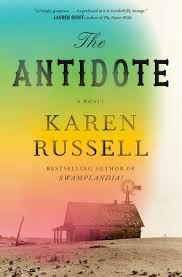
The Antidote by Karen Russell
Where do you place the things you don’t want to remember? If you live in the Great Plains of this dazzling novel, you confide them to a prairie witch—a woman who serves as a vault to hold a town’s secrets so everyone else can forget them. But one day at the height of the Dust Bowl in the farm town of Uz, Nebraska, a prairie witch called The Antidote awakens to find herself in jail and her soul empty of the secrets her clients paid her to contain. Toss in a ruinous drought, a brutal sheriff, and a serial killer on the loose, and you have a town that desperately needs a touch of magic or, even more rare, human kindness. The Antidote finds these in a teenage girl who’s a basketball whiz, a Black woman who’s photographing the Dust Bowl for FDR’s arts program, and a lonely farmer who curses his good fortune. The mix of actual historical events, magical elements, deep characterization, gorgeous, assured writing, and an astonishing true-life arc of erasure makes this a novel to think about long after you close the book.
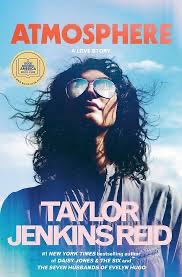
Atmosphere: A Love Story by Taylor Jenkins Reid
Thoroughly entertaining novel about two women astronauts in the early 1980s who fall in love with each other. Joan and Vanessa are among a small coterie of women scientists, surgeons, and engineers who win spots in NASA’s second group of astronauts to include women and people of color. (The real-life Sally Ride was in the first group; until then, all astronauts had to be military pilots, a job closed to women.) Joan and Vanessa go through the thrill and rigors of astronaut training and then space flight—all the while knowing their slightest misstep could doom all future women astronaut candidates, and carrying out a cosmic love story in the crippling secrecy required by the times and their government jobs.

Behind You is the Sea by Susan Muaddi Darraj
Imagine a mosaic made of beautiful pieces of colored glass, some of them chipped, and you have a sense of this novel. In nine chapters with alternating points of view, each of which works as a standalone short story, the author creates three interconnected Palestinian American families who live in and around Baltimore today. We meet the tough lawyer who is a hero to her clients and a failure to her mother; the dutiful son who escorts the body of his angry, estranged father back to a homeland the son has never visited; the fully American grandchildren, the homesick immigrant grandparents, and the generation stretched between them, all of them pulled by the gravity of their traditions and the demands of their new land. And then a young woman in a Palestinian village is murdered by her father and brothers, and this “honor killing” casts its long shadow all the way to Baltimore. (Recommended to me by Martha Toll)
The Dream Hotel by Laila Lalami
This near-future novel is, unfortunately, a book for our time. Sara Hussein is a museum archivist, a mother, a wife, and an insomniac. She tries a brain implant to help her sleep; it works, but it harvests data from her dreams, and an AI algorithm concludes that she is at high risk for committing violence. In a chilling scene, she is detained at the airport—but is it because of her dreams? Her brown skin? The way she snapped at the TSA agents? Sara is sent to a detention center run by a private corporation that rents out the inmates’ labor, where she creates wary connections with other incarcerated women. No one knows what criteria determines when they can be released, and any tiny infraction of dress, demeanor, punctuality, even what or how they eat, can add time to their detention. As her incarceration lengthens, even Sara’s husband seems to lose interest in her. If she is ever to escape this netherworld, it will be up to her—but the elements that make Sara authentically “her” are the very ones the system uses to keep her locked up.
A Family Matter by Claire Lynch
Sad and lovely novel about a British family torn apart by the brutal homophobic laws of the 1980s (although it seems like the 1950s), through which lesbian mothers routinely lose custody of their children and are debased and humiliated by the courts. A young mother named Dawn falls in love with another woman and is denied all access to her beloved three-year-old daughter. The story is told from the point of view of Dawn, her husband, and their daughter—forty years later when the daughter is a mother herself and finally learns the truth about her own past. The brief sections that focus on the court case are particularly chilling, since the incredibly intrusive and insulting questions asked by the lawyers and judge are all taken from real trial transcripts of the era. A brief novel with a lingering sting.
Heartwood by Amity Gaige
A middle-aged woman who’s hiking the Appalachian Trail disappears, and two other women—an experienced game warden and a retired scientist—make it their mission to find her, one by leading an arduous backwoods search and one by following scientific clues. A gripping literary novel that creates mounting tension as it explores the tangled ties between mothers and daughters and among the people we choose to call family.
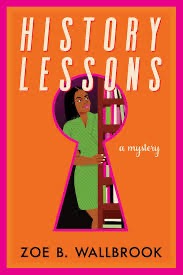
History Lessons by Zoe B. Wallbrook
Light-hearted mystery about a scholar of French history, in her first year teaching at a prestigious university, who receives an odd text from a colleague and later discovers he sent it moments before he was murdered. Daphne is used to being the only Black woman in white spaces and used to keeping secret the many strange skills she’s developed through her family’s profession, which appears to be espionage. She didn’t think she’d need those skills in the quiet academic life she’s built, but as she gets swept into solving her colleague’s murder, they just might save her life. The book had a little too much rom-com writing for my taste, but it was a fun distraction from real life.
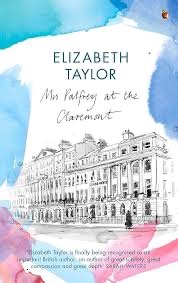
Mrs. Palfrey at the Claremont by Elizabeth Taylor
Delightful 1971 novel about a newly widowed woman, Mrs. Palfrey, who goes to live at a residential hotel for genteel old people in London. When she falls while out on a walk, Mrs. Palfrey is rescued by a young man named Ludo, who joins her in a gentle deception for the sake of her hotel-mates: that he is her devoted grandson. In fact, he is as lonely as she is, and the relationship bolsters them both. Mrs. Palfrey and the other Claremont residents have lived through both World Wars and the death of the British Empire, so observing the upheavals of the 1960s makes them feel even older than their years. The book is stuffed with sharply drawn characters, wrapped in a narrative that is tinged with mortality and often slyly funny. (Recommended to me by Kristin Ohlson)
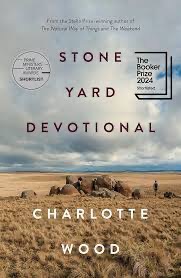
Stone Yard Devotional by Charlotte Wood
This is the book I’ve recommended the most frequently this year. An Australian woman in her 60s who works at an environmental nonprofit goes to a week-long retreat at a convent in the rural area where she grew up. She’s not religious but her despair with the world is such that she goes back to Sydney, leaves her job and her marriage and returns to the convent for good. (There’s a scene in which she unsubscribes from all her newsletters, including several I subscribe to.) Her life at the convent is basic: cooking, cleaning, gardening, learning silence and humility. They are so isolated that the pandemic doesn’t shake them much. Their peace is disrupted by three arrivals: the bones of a former nun; a visit from another former nun who left the convent to become an activist superstar but in her childhood went to school with the protagonist and was mercilessly bullied; and a plague of mice that overruns the convent and all of Australia. (The mouse infestation actually happened.) It’s a joy to read a quiet novel in which adults grapple with questions about what constitutes a good life and what we owe to one another.

More Recommended Fiction

  • 33 Place Brugmann by Alice Austen
  • After Oz by Gordon McAlpine
  • Bear by Julia Phillips
  • The Book of Form and Emptiness by Ruth Ozeki
  • The Boy in the Field by Margot Livesey
  • Bug Hollow by Michelle Huneven
  • Casualties of Truth by Lauren Francis-Sharma
  • Creation Lake by Rachel Kushner
  • Culpability by Bruce Holsinger
  • Dinosaurs by Lydia Millet
  • Fallout by Jordan Rosenfeld
  • Held by Anne Michaels
  • How High We Go in the Dark by Sequoia Nagamatsu
  • Kills Well with Others by Deanna Raybourn
  • Let Us Descend by Jesmyn West
  • May the Wolf Die by Elizabeth Heider
  • The Mighty Red by Louise Erdrich
  • Orbital: A Novel by Samantha Harvey
  • Our Woman in Moscow by Beatriz Williams
  • The Paris Express by Emma Donoghue
  • Queens of Crime by Marie Benedict
  • The Road from Belhaven by Margot Livesey
  • The Safekeep by Yael van der Wouden
  • Smoke Kings by Jahmal Mayfield
  • So Big by Edna Ferber
  • Swift River by Essie Chambers
  • Tell Me Everything by Elizabeth Strout
  • There Are Rivers in the Sky by Elif Shafak
  • Wild Dark Shore by Charlotte McConaghy

Nonfiction
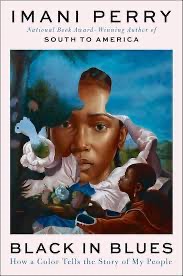
Black in Blues: How a Color Tells the Story of My People by Imani Perry
I’ve never read anything by Imani Perry that I didn’t love, and this book is no exception. It’s a swirling, almost stream-of-consciousness exploration of the color blue and its many connections to Black history, culture, politics, creativity, and spirituality. Yes, you’ll find the musical genre of the blues examined in Perry’s intimate, erudite, and protean writing style, but also blue jeans, cobalt, blue skin, and forms of blueness you never noticed or whose meaning you never understood. Perry leads us on a journey into the heart and history of this most omnipresent color.

More Recommended Nonfiction

  • 107 Days by Kamala Harris
  • The Dragon from Chicago: The Untold Story of an American Reporter in Nazi Germany by Pamela Toler
  • Everything is Tuberculosis by John Green
  • Is a River Alive? By Robert MacFarlane
  • Spell Freedom: The Underground Schools that Built the Civil Rights Movement by Elaine Weiss

What’s Next?

In less than a week it will be a new year. An election year. A year when enticing new books will be published and older books will beckon from library and bookstore shelves. Got any suggestions for what should go on my To Be Read list?

My Year in Books – 2019

Photo: Mr. T in DC

It’s almost 2020. We’re going to need strength, inspiration, and sustenance—in other words, books.

I hope you will find some good reads in this list of the books I read in 2019. Fiction is first, followed by nonfiction. Enjoy—and please recommend some titles I should read in 2020.

Continue reading

Ready for some summer reading?

Photo: telegraph-co-uk

It’s summer! Time to read a few good books. Hope you will find some appealing choices among these books I’ve read in 2019.  What have you read lately that you can’t stop talking about?

Fiction

Disappearing Earth by Julia Phillips

 Fabulous novel about the lives of women on the isolated Kamchatka Peninsula in Russia. Two young sisters are kidnapped from the busy center of the peninsula’s largest city, and the widening circle of people touched by their disappearance creates the web-like structure for this mesmerizing novel. The book takes place in the present day, but Kamchatka’s history – recently emerged from Communism, and still struggling with tensions between Russians and the indigenous Northern people who herd reindeer – and geography play as large a role in the plot as do cellphones.

The Dreamers: A Novel by Karen Thompson Walker

In an idyllic, affluent town in California, students at the local college keep falling asleep and not waking up. Some die but others sleep on. Soon the gentle epidemic spreads, and the town is quarantined from the rest of the world. I enjoyed the book but appreciated her previous novel, The Age of Miracles, much more.

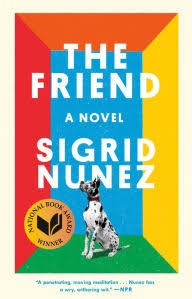
The Friend by Sigrid Nunez

 I will read almost anything Sigrid Nunez writes. This novel is about a woman whose best friend—they are both writers in the upper stratosphere of the literary world – kills himself, and leaves his gigantic Great Dane to live with her in her 500-square-foot, no-pets-allowed apartment in New York City. A witty and erudite consideration of love, grief, loyalty, literature, and dog behaviors.


The Great Alone by Kristin Hannah

A teenage girl and her parents move to rural Alaska in the 1970s. Her father, a violent and abusive alcoholic, has failed in every job and every city, and Alaska is the end of the road literally and figuratively for this family. We watch the girl grow up to love the wilderness which, despite its peril, is much safer than her own home. The author does a wonderful job of revealing the daily tasks and existential challenges of homesteading in rural Alaska, and of portraying a fractured family and a daughter who realizes, almost too late, that her mother never will be able to leave her dangerous husband.

The Incendiaries by R. O. Kwon

Two college students who never really fit in at their elite university find a home with each other – and with the other members of a cult and its beguiling, unpredictable leader. Secrets, revelations, and dangers exert their own power on these two students who have thrown off their histories and sought, with varying success, to inhabit frightening new truths for themselves.

Melmoth by Sarah Perry

 In modern-day Prague, a British woman who lives an ascetic life as a translator is introduced to the myth of Melmoth, the loneliest woman on earth, doomed to perpetually travel the world and witness its wrongs. As the translator feverishly researches this figure, who appears in many cultures, languages and centuries, she begins to realize that she too is haunted by Melmoth, and perhaps shares Melmoth’s destiny to bear witness to her century’s atrocities.


Normal People by Sally Rooney

A close-up examination of the intense and fluctuating relationship between two young people in Ireland – she a loner and outsider, he a popular athlete – who become lovers in high school and again in college, when their roles have reversed. These two can tell each other anything except, it appears, how they really feel.

Pachinko by Min Jin Lee

A fast-moving novel that delves into the lives and characters of one Korean family over the course of 70 eventful years. Fascinating historical and cultural detail, particularly about the lives of women, with a plot that keeps unspooling into the present day.

Station Eleven by Emily St. John Mandel

I didn’t expect to love this book as much as I did. It begins 20 years after a fast-moving flu has killed 99 percent of the world’s population, a loss so devastating the survivors started counting time anew, at Year 1. The novel sways back and forth in time, exploring the pre-plague lives of the flu survivors and their friends and families, who took for granted such miracles as electricity and the Internet, and the post-pandemic experiences of people trying to create a new kind of civilization to replace the one that was lost. At the heart of the story are the members of a troupe of performers – a symphony plus Shakespeare theater – who, in the years after the flu, travel the countryside to perform in small towns and settlements. While I wouldn’t want to live in the devastated world the novel creates, I was sorry to leave it and say goodbye to its compelling characters and its examination of the roles we play in each other’s lives, both onstage and off.

Still Life with Monkey by Katharine Weber

Did you know that tiny Capuchin monkeys are trained to serve as assistants to disabled people? Neither did the couple at the heart of this book, until they had to learn. Duncan survives a terrible car accident that kills his passenger, and must manage to adjust to a life where he can feel and control only a few fingers on one hand. His wife Laura was not in the car but was the third victim. She welcomes the help and liveliness of Ottoline, the monkey who can help Duncan achieve impossible tasks such as turning the page of a book or stirring his coffee. The situation is grim, but Weber brings her trademark dry wit and incisive intellect to the endeavor.

Transcription: A Novel by Kate Atkinson

In WWII England, a young woman is recruited, somewhat against her will, into MI5. It’s mostly administrative work, with some thrilling and terrifying forays into actual espionage. After the war, during a long career at the BBC, she finds that the hold MI5 has on its agents never ends, and she can’t escape the sense that she isn’t sure which side anyone is truly on.

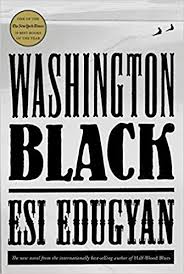
Washington Black by Esi Edugyan

 In 1830, a young boy born into slavery on a plantation in Barbados is lifted – literally – beyond the small, brutal world he’s known by the brother of the man who owns the plantation and therefore, the boy. The brother, a scientist, has chosen George Washington Black because the boy is the right size and weight to serve as ballast in the hot air balloon the brother is trying to build, and in which they make their escape from the plantation. From there Wash, as he’s known, serves as observer and narrator, taking the reader on the extraordinary journey of his life, from Barbados to Virginia to Antarctica to Canada and beyond, giving us a view of his mid-19thcentury world of scientific ideas and a glimpse of what it’s like to be no longer in bondage yet never fully free.

The Witch Elm by Tana French

This author usually writes detective mysteries that have beautiful language and deep psychological insights. This novel has a murder and a mystery and family secrets galore, but at heart it’s a thoughtful exploration of the power of privilege.

Women Talking by Miriam Toews

A sage and searing novel based on true events. In a Mennonite colony in Bolivia, the women and girls discover that the injuries and dizziness they’ve been suffering are not the work of demons but of the men in their tiny, isolated community. The women are offered two choices by the religious leader of their patriarchal society: forgive the men, or leave. None of the women can read, write, or follow a map. They don’t speak Spanish or even English; they speak an old German language used only by Mennonites. The men who for months have drugged and raped the women and girls are the husbands, fathers, sons and brothers of the community. Faced with this almost unimaginable – yet true – situation, the women gather in a hayloft over several days to decide what to do. Their discussion comprises this brief, powerful novel.

Nonfiction

Bad Blood: Secrets and Lies in a Silicon Valley Startup by John Carreyrou

Fascinating behind-the-scenes look at the bizarre rise and fall of Theranos, a company that claimed to revolutionize blood-testing and that succeeded in making a media darling and a billionaire out of its founder, Elizabeth Holmes – before it was revealed that the product and the company were frauds.

Be With Me Always by Randon Billings Noble

 A collection of varied, lapidary essays about the things that haunt us, from almost-loves to bodily damage to the hidden meanings of the very words we use to express our longings and satisfactions. I suggest savoring these essays like fine chocolates, one per night. (Full disclosure: Randon is a friend.)


Heartland by Sarah Smarsh

The author grew up in a white family living in rural poverty in Kansas. Through this memoir – weirdly addressed to a child she decided never to have – she seeks to highlight the causes and costs of this kind of white poverty, and reveal in gritty detail what this precarious, relentlessly arduous way of life is like.

How to Sit: A Memoir in Stories and Essays by Tyrese Coleman

 As you can tell by the title, it’s hard to know how to characterize this collection of powerful and painful – yet often witty – stories about growing up black and female. Self-knowledge comes with a price, but closing her eyes is even more costly for a girl named T who grows into a woman who knows too much yet has too many questions for a world where women like her are constantly being told who and how to be.


Inheritance by Dani Shapiro

After taking a DNA test on a whim, writer Dani Shapiro learned that her father, the center of her universe as a child and the pillar of her family, was not her father. She was raised as a Jew in an Orthodox family, attended shul and yeshiva, yet was haunted all her life by people, including in her own family, telling her she didn’t look Jewish. Now in her 50s, a mother herself, Shapiro understands why she has always felt different. With her parents dead and no relatives to ask, a deeply shaken Shapiro sets out to find the truth about her own history.

In the Darkroom by Susan Faludi

In the early 2000s, the feminist journalist Susan Faludi went to Hungary to visit her father, a violent, controlling man from whom she’d been estranged for years. After living in the U.S. for decades, he had returned to his home country of Budapest – where he’d hidden from the Nazis as a boy – and decided to become his “true” self: a woman. Faludi finds that Stefánie is just as extreme as Steven had been, embracing all of the feminine roles and stereotypes that Faludi had spent her life overturning. Through years of visits and emails, Faludi learns more – but never enough – about this maddening, secretive, self-aggrandizing, but very human parent.

Madam President by Jennifer Palmieri

A brief, greeting card of a book composed of advice from Palmieri to the first woman president – whoever she will be – and based on the author’s experience in the Clinton and Obama White House and the Hillary Clinton campaign. Worthwhile mostly for a few backstage glimpses of these campaigns.


What should I read next? Please share your recommendations.


My Year in Books – 2018


It already feels like 2018 was a loooong time ago, but here it is: the list of books I read in 2018. Fiction comes first, followed by nonfiction.

Hope you find some good reading choices here. And send me your recommendations!

Fiction

All My Puny Sorrows by Miriam Toews

Nothing is better than feeling so stunned by a novel’s power and originality that you linger over the last page, reluctant to leave the world the book has created. This is such a novel. Elfrieda and Yolandi are two sisters who grew up in a Mennonite community in the plains of Manitoba, Canada. They and their mother are far too lively for the conservative community; the elders think they read too many books, and are horrified when it becomes clear that Elfrieda is a piano prodigy. The girls grow up, move to the city and embark on their adult lives: Elfie as a world-class concert pianist, and Yoli as a writer and mother. They live in the modern world but come from a death-haunted history with suicides on all branches of the family tree. Despite her talent, success and loving family, the one thing Elfrieda yearns for is to die. And she wants Yoli to help her, although Yoli is desperate to keep her sister alive. The thing is, this novel is hilarious even as it shreds your heart. From the sisters to the mother to the aunts, this is one of the most lively and unique fictional families I’ve encountered. The language is extraordinary; you could study it for a long time before figuring out how Toews manages to be so funny and so searing at the same time.

Continue reading