30 Women Novelists You Should Know – #16 Brenda K. Marshall

The world is full of glorious novelists who don’t appear on best-seller lists or magazine covers, who support themselves with other work while they quietly produce their gifts to the universe. I think Brenda K. Marshall is one of these.

Gifts to the universe

She teaches at the University of Michigan, and her first book was a work of pedagogy called Teaching the Postmodern. Then she moved to fiction with her first novel, Mavis, published in 1996.

But I didn’t discover Brenda Marshall until 2010 when a member of my book group, who was friends with Marshall and also taught at Michigan, suggested we read Marshall’s latest novel, Dakota, Or What’s a Heaven For? The book was a revelation.

The violent birthing of a state

In the novel, two educated young women from Philadelphia move with their families to the Dakota territories in the sod-busting, homesteading years before Dakota become a state (much less two). One woman is in love with the other, and marries the brother of the woman she loves so they can stay close. The deft, confident narrative swoops from this woman to a young girl from Norway to an old politician who describes himself as “pretty close to honest,” to a rapacious profiteer. If you read the introductory chapter you’ll get a good sense of the novel: smart, witty, and fresh.

Marshall brings the reader inside the experience of the violent birthing of a state. You see the bleak, majestic prairies, the families struggling to stay clean in their houses made of earth, the women trying to tame this new world and their own hungers, the men whose only language is money, making back room deals that will ruin families and futures they care nothing about.

She doesn’t shy away from the harsh realities of the frontier experience, giving her lively attention to the brutality faced by Indians and immigrants alike, the venality of the men who carved up the country for their own benefit, and the suffocating, inescapable power that men held over women who had no right to call anything their own.

“A secret is a story we keep to ourselves.”

The characters are engaging, from sharp, energetic Frances with her hopeless love for her sister-in-law to a camp cook who hides more than one secret. In fact, many people in the novel have secrets they hold close. What’s a frontier for, if not to reinvent yourself?

“A secret is a story we want to keep to ourselves,” Brenda K. Marshall said in an interview on The News in Books blog. “A story doesn’t have to be true to be powerful. If you tell a story enough about yourself, you can convince yourself that it’s true.”

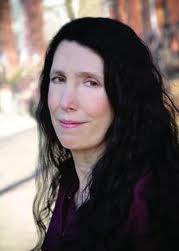
Brenda K Marshall

30 Women Novelists You Should Know – #15 Andrea Levy

Now that my novel Her Own Vietnam is out in the world, I’m going back to writing about 30 Women Novelists You Should Know. We’ve reached the halfway mark with Britain’s Andrea Levy.

How many ways can you say “wow!”?

Andrea Levy has won so many literary prizes in England, it’s as if they ran out of superlatives to use when describing her work. Her 2004 book Small Island won not only the Whitbread Novel award, but the Whitbread Book of the Year award. Not only did it receive the Orange Prize for Fiction, it also won the Orange Prize ‘Best of the Best’ award.

Four voices, four futures

As far as I’m concerned, the novel deserves all of these accolades and more. It’s a beautiful and powerful story of two couples in England in the years after World War II.

Hortense and Gilbert are Jamaican immigrants who had been taught to consider England their mother country, and are shocked by the hostile welcome they receive. Queenie is a white working class woman who married Bernard to escape her destiny working on the family pig farm, and then found London and her husband to be not at all what she expected. The novel is told from the point of view of all four characters, as the major issues of their (and our) time – war, immigration, race, the personal courage to do the right thing – shape their lives and their world in unimaginable ways.

 A faithful TV adaptation

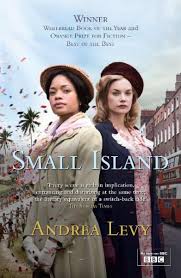
The BBC adapted Small Island into a two-part television miniseries. It was one of the most faithful novel-to-TV adaptations I’ve seen. Watching it felt like revisiting the book. I think the care the producers took in adapting the book is reflected in the similarity between the original cover for the novel (L) and the cover image for the video (R).

Small Island book cover

Small Island book cover


BBC Video Cover Image

BBC video cover image


More books to come

Andrea Levy started to write when she was in her thirties. Today, in her fifties, she has written four other novels in addition to Small Island, as well as two collections of short stories, many of which also won important literary prizes. I’m excited to think about all the Andrea Levy books still to be read.

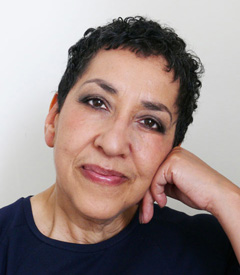
Andrea Levy new

30 Women Novelists You Should Know – #14 Zelda Lockhart

Only 10 more days until my novel Her Own Vietnam is published, but 16 more fabulous women novelists to explore. Today: Zelda Lockhart.

Powerful and harrowing

You might say that Zelda Lockhart is a friend of mine. Bu since we haven’t seen each other since 2002, does that make us merely acquaintances? Friend, acquaintance, whatever – she’s a gifted writer.

Zelda’s first novel, Fifth Born, is a powerful and harrowing story of a young girl’s search for belonging as she tries to separate herself from her abusive family and their almost inescapable history. The novel has one of the most striking covers of any book on my shelves.

Fifth Born

Cold Running Creek is historical fiction based in the time surrounding the Civil War. It avoids the usual characters that populate many novels set in that era, and instead focuses on the struggles of Native American and African American women as they try to survive  during the waning days of slavery and the violent theft of Indian land. Fifth Born II: The Hundredth Turtle builds on Zelda’s debut novel, moving its protagonist Odessa from Mississippi and Missouri to New York City amidst the upheaval of social movements in the 1970s and 80s.

A quiet grief

In the Spring 2014 edition of the beautiful literary journal Referential Magazine, Zelda has a moving short story called The Empty Nest. In it, the narrator describes her daughter’s approaching adulthood as “the slow departure from my intentions.” If any phrase better encapsulates the quiet grief of parents as their children do what they must do and grow apart, I haven’t encountered it.

A busy woman

In addition to writing, Zelda Lockhart teaches, leads workshops, does public speaking, and is the director and founder of LaVenson Press Studios in North Carolina. There women writers can find their voices, sharpen their skills, and create a community. Zelda is making a place for herself and her sisters, in the heart of the written word.

Zelda Lockhart

30 Women Novelists You Should Know – #13 Caroline Leavitt

As I count down to the publication date of Her Own Vietnam, I’m counting up to 30 fantastic novelists you should know.

Empty-handed but not for long

I met Caroline Leavitt once, for 30 seconds. She was about to do a reading at a book festival; I was in the audience.

I planned to pick up her book after the reading, so when we met I was a little embarrassed to be empty-handed. I did buy the book afterwards, and I’m glad I did, because it turned out to be my favorite of her novels: Is This Tomorrow?

Is This Tomorrow?

In the novel, Ava Lark and her young son Lewis move into a lovely Boston suburb, hoping for a new start. Instead, they are snubbed and ostracized.

The year is 1956, and everything about Ava is wrong for her new community. She’s divorced, she’s Jewish, she works for a living – and she’s beautiful, which the local husbands have noticed. When a child in the neighborhood disappears, a child who is friends with Ava’s son and has spent time at her house even when Lewis was gone, the town’s suspicion turns sinister.

Leavitt does a powerful job of creating the atmosphere of casual anti-Semitism and rabid anti-Communism that permeates the leafy suburb. Anyone with a different style, anyone with different values, anyone Jewish is immediately suspected of being a Communist.

Ava Lark is a compelling character: lively, compassionate, bold but vulnerable. She’s the kind of outsider you long to befriend, but Leavitt makes you wonder: if you lived in that town, with its harshly enforced code of conformity, would you dare to reach out to someone like Ava?

 She’s a little busy

Caroline Leavitt keeps herself busy. She writes essays, screenplays and book reviews. She teaches writing. She maintains a lively Facebook presence and writes a wonderful blog, on which she interviews all kinds of authors. And she’s a New York Times bestselling author who has written ten novels, with another coming out in 2015, called Cruel Beautiful World.

I know where I’m going to be when that new book of hers is released. On the couch, reading and falling deeply into the fraught, luminous world created by Caroline Leavitt.

Caroline Leavitt

30 Women Novelists You Should Know – #12 Lily King

As I count down the days to the launch of my novel Her Own Vietnam, I’m writing about wonderful women novelists.

Gorgeous writing and powerful emotional pull, if you like that sort of thing

I’ve now read three of Lily King’s four novels, and I still can’t say exactly what it is that stamps a novel as a work of Lily King. The books are so different, set in different times and places with characters who share little in common, united only by the gorgeous writing and the powerful emotional pull of each novel.

The Pleasing Hour is about a young American woman who goes to Paris to work as an au pair and escape a tragedy in her past, only to find that the past is more alive in Europe than anywhere, and that tragedy shadows us all.

In The English Teacher, a high school English teacher with a teenaged son marries a man with teenagers of his own, and her world begins to unravel. Once you read this book, you’ll never think of Tess of the D’Ubervilles the same way again.

Euphoria

Her latest book, Euphoria, is about three anthropologists in the 1930s, studying and living among tribes in Papua New Guinea. The three scientists – an American woman who has written a shocking and best-selling book about the sex lives of a tribe, her Australian husband and an English man they know only slightly – plunge into a love triangle that’s a vortex of passion, intellectual zeal, rivalry, ambition, and perhaps a dash of madness.

The novel immediately creates an atmosphere of peril and strangeness. By the time I read the first five sentences, I was hooked: I had to know what had happened and what would happen next, even though I suspected it would be harrowing. And it was – harrowing, and uplifting and most of all, fascinating. The details about how anthropologists conduct their work and their lives were astounding.

A growing sense of dread

As I read, I was gripped by a growing sense of dread, both that something awful was about to happen and that the book was coming to an end. You know that feeling of grief you have when you finish a beloved book? Well, authors feel that too, as Lily King wrote here.

On my bookshelf, Lily King’s Euphoria stands next to Barbara Kingsolver’s The Poisonwood Bible. It seems fitting.

Lily King

Lily King