30 Women Novelists You Should Know – #6 Sonya Chung

I’ve been sharing some thoughts about my favorite novelists. You may already be familiar with many of them, but I hope you’ll find some new favorites of your own in this list.

 Only one, but it’s a beauty

Sonya Chung has written only one novel so far, and it’s a beauty. Long for this World is about a war photographer who is injured in Iraq and goes home to recover in New York.

“Home” is an ambiguous concept for her, since she has spent the past decade traveling to all the world’s worst places, preserving images and losing people. When she learns that her father has abruptly left her mother and gone to visit his brother in Korea – the first time he has returned to his home country in decades – the daughter goes to find him, bringing her cameras, her childlike Korean, her weariness and her curiosity about this mysterious notion of family.

According to whom?

Chung was 37 when Long for this World was published – a late bloomer, according to some standards of the literary world. This, of course, ignores her many published and lauded stories and essays. And it’s a nonsensical standard to begin with (says the writer who also published her first novel at 37).

In response, Chung went on to found Bloom, a literary website that features writers whose first books were published when they were 40 or older. The site’s tagline is “’Late’ according to whom?”

You can find Sonya Chung’s writing all over the Web. What you won’t find – yet – is her second novel. Wait for it. Watch for it. It’ll be worth it.

Sonya Chung

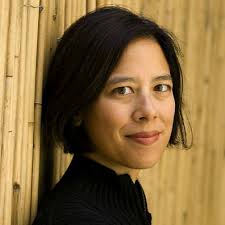
Sonya Chung

30 Women Novelists You Should Know – #5 Susan Choi

Only a few weeks to go before my novel Her Own Vietnam is published, and still many fabulous women novelists to discuss. Moving in alphabetical order, today it’s Susan Choi.

We think we know this story – but we don’t

Susan Choi explores events, situations or characters that we think we know and upends them, making them both less familiar and more illuminating of life in America. Her characters are sometimes unlikeable but always compelling, and Choi’s psychological insights penetrate even the most complicated characters.

I became a Susan Choi fan after reading American Woman, published in 2003. The novel uses some elements of the well-known Patty Hearst saga – a young heiress is kidnapped by left-wing radicals and comes to join them – and melds them into a story we’ve never read before.

Choi’s focus is not on the Patty Hearst figure, but on the woman no one notices, a revolutionary of Japanese-American descent who agrees to hide the heiress and ultimately grows to love her, all the while knowing that it is she herself – not white, not rich, not recognized as fully American – who is the most at risk. The novel was a finalist for the Pulitzer Prize.

The power of otherness

A Person of Interest (2008) is based loosely on an amalgam of two real-life stories: the Unabomber saga, and the scientist whose life was destroyed unfairly when he was announced as a person of interest in the anthrax case. In the novel, a mathematician named Lee is nearing retirement at a Midwestern university. He is envious of his young, popular neighbor in the faculty offices – until the man opens a package that contains a bomb. Lee ultimately becomes a person of interest in the case. The novel is part mystery, part procedural, but mostly a detailed, thoughtful exploration of life as a perpetual outsider.

In My Education (2013), a graduate student is powerfully drawn to her glamorous professor. It’s a timeworn literary trope, but with a writer of Choi’s skill and originality, nothing is quite what you expect. To start with, the student ends up falling in love not with her professor, but with his wife.

The dynamics of race, gender, ethnicity, class and culture – the very definition of “otherness” – play central roles in her work. With the sure hand of an expert storyteller, Susan Choi takes on the unpopular, the unsayable, and the deeply intriguing.

Susan Choi

Susan Choi

30 Women Novelists You Should Know – #4 Jillian Cantor

As the publication date for my novel draws closer, I’m thinking and writing about 30 Novelists You Should Know. And they’re all women.

What if?

What if Margot Frank, Anne Frank’s older sister, had survived the concentration camps? What if she tried to shed her past by moving to Philadelphia and creating a new identity for herself as a non-Jewish woman named Margie Franklin?

This is the premise of Jillian Cantor’s compelling and haunting novel, Margot. The book takes place in 1959, just as the movie version of “The Diary of Anne Frank” sweeps across America.

A fresh look at a well-known story

A vast number of people throughout the world have read The Diary of a Young Girl. (For a fascinating examination of the book’s reach and impact, read Anne Frank: The Book, the Life, the Afterlife by Francine Prose.)

I read Anne Frank’s diary as a teenager and have reread it as an adult. Like most Jews of my generation, I’ve also read a large amount of Holocaust literature.

Margot is something different. It centers on the sister we never knew, the one we readers saw only through our peripheral vision because we couldn’t take our eyes off Anne. And it provides a shocking glimpse of the casual and pervasive anti-Semitism in post-war Philadelphia, just years after the horrors of the Holocaust had become fully known.

An appalling inspiration

Cantor’s inspiration to write Margot emerged from an appalling event. She was only yards away when Congresswoman Gabrielle Giffords was shot and six people were murdered, including a girl only a little older than Cantor’s own children. You can read about it here.

A writer to watch

Jillian Cantor has written another novel for adults and three for teen readers. I learned about Margot through book reviews, and had not been familiar with Cantor before that. I’ll definitely be watching for future work from her.

If you read Margot, read it for the story – and to see how a writer’s words can transform a tale so familiar into something new and evocative.

Jillian Cantor

Jillian Cantor