30 Women Novelists You Should Know – #27 Stephanie Feldman

Photo: Theday.com

Photo: Theday.com

The Angel of Losses by Stephanie Feldman is a wonderful novel – beautifully written, engaging and surprising. It’s also full of wonders: miracles, myths and mysteries.

Marjorie and Holly were as close as two sisters could be. They adored their grandfather, who lived with them and told them enthralling stories about the White Wizard and an angel, even though he sometimes got angry when they asked too many questions. Both girls were heartbroken when he died.

Things turn strange

But by the time we meet Marjorie and Holly, things have changed. Marjorie is a Ph.D. student researching the ancient anti-Semitic legend of the Wandering Jew, and spending more time in the library than with her family or friends.

Although they were raised as  Christians, Holly has converted to Judaism, changed her name to Chava, and married into an ultra-Orthodox splinter community with mystical beliefs so strange even other ultra-Orthodox groups look askance at them. Marjorie and Holly (she refuses to call her sister Chava) have barely spoken in months.

Then Marjorie finds one of her grandfather’s notebooks – which he had begged his son to destroy after his death – and discovers something shocking. Her grandfather has written down all the tales he used to tell about the White Wizard, but in the notebook the magical man is the White Rebbe, a rabbi who has been blessed with the power to perform miracles and cursed with immortality.

A survivor bearing a dreadful secret

What’s more, Marjorie realizes that her beloved grandfather had been lying to her all along. He was Jewish, it turns out, a survivor of the Holocaust bearing a dreadful secret. He was also the carrier of a legacy so powerful and mysterious it will take all of Marjorie’s strength and intellect to track down the truth and protect her family – particularly Holly’s newborn son.

“He’s coming for me,” Marjorie’s grandfather tells her in what she hopes is a dream. “And then he’s coming for you.”

Ancient mysteries and present dangers

But who is “he” – the White Rebbe? The Angel of Losses that the Rebbe must confront? The mysterious old man who seems to follow Marjorie everywhere and dole out tiny fragments of the story she’s so desperate to understand? And what do any of these ancient mysteries have to do with Marjorie and Holly? The only thing that’s clear is that Marjorie must figure it out, because the life of her infant nephew is at stake.

“A breathtakingly accomplished debut”

Ellah Allfrey of NPR Books called The Angel of Losses a “breathtakingly accomplished debut,” and I couldn’t agree more. The book sparkles with sharp, fresh images and gorgeous writing.

For a novel about angels, miracles and Jewish history from the medieval era through the Holocaust to modern-day New York City, The Angel of Losses is as suspenseful as any mystery story. You don’t need to be Jewish to enjoy and appreciate the novel. Everything you need to know is in the book, along with a healthy dose of wonder.

“I still believe that writing is most exciting when it’s an act of discovery,” Stephanie Feldman said. In that case, it must have been thrilling to write The Angel of Losses. I know it was thrilling to read.

Get a free copy of The Angel of Losses

The paperback edition of The Angel of Losses was just published a couple of weeks ago. I’m delighted to have two copies to give away.

There are two ways to toss your name in the hat to win a copy.

You can contact me through this blog and let me know you’d like a copy.

Or better yet, you can sign up for my monthly newsletter to be eligible to win this and other free books by women writers. I give away one or two each month. When you receive the newsletter, just hit reply and tell me which book you want.

I’ll choose a name from those who contact me. (Sorry, I can only ship to U.S. addresses.) I hope you will enjoy this enthralling novel as much as I did.

Angel of Losses

Update from book world

indiefab-silver-imprintSparkling in silver

I’m thrilled to tell you that Her Own Vietnam has won the Silver in Foreword Reviews’ INDIEFAB Book of the Year Awards in its category (war and military fiction). The award, which was selected by a panel of librarians and booksellers, was announced on June 26. This is the first literary award I’ve ever won, and the first (of many, no doubt) for my publisher, Shade Mountain Press.

Let’s get together

If you live in the Washington, DC area, please come to my reading and book talk about Her Own Vietnam on Tuesday, July 7th at 6:30 pm. The event will be at Busboys and Poets on 14th and V, hosted by Politics and Prose, which has a bookstore within the restaurant. The reading is free and you’ll meet cool people there.

Busboys and Poets

We’ve got winners!

As you may know, I’ve been giving away free books by women writers through this blog and through my newsletter, Being Bookish. Here are this month’s winners.

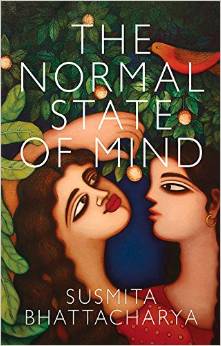
Congratulations to G.R. of Minneapolis, MN, who won a free copy of The Normal State of Mind by Susmita Bhattacharya.

And congratulations to H.F. of Louisville, KY, who won a free copy of Fugitive Colors by Lisa Barr.

Want some free books? Check this blog, or you can sign up for the newsletter here if you’d like the free book opportunities to come to your inbox. July’s giveaway book is the fabulous novel The Angel of Losses by Stephanie Feldman.

Angel of Losses


30 Women Novelists You Should Know – #26 Tayari Jones


Photo: radcliffe.harvard.edu

Photo: radcliffe.harvard.edu

Silver Sparrow is a book with a beating heart. The novel is about two girls growing up in Atlanta during the 1980s who have much in common. They’re the same age, live in the same middle class black community, frequent the same malls and follow the same rules and rituals of teenage life.

But only one daughter, the smart and beautiful Dana, knows what they really share: a father, James Witherspoon. And she’s understood since she was six years old that she and her mother Gwen are the family that must remain a secret.

Inside the sparkling world

It seems to Dana and Gwen that James’ other family – his wife Laverne and daughter Chaurisse – are the fortunate ones. They live in the nice house and see James every day, not just during a surreptitious visit once a week. And we, the readers, think so too, until the novel shifts from Dana’s voice to Chaurisse’s, letting us inside the sparkling world that Dana and Gwen have glimpsed only on their spying excursions.

There we learn that Laverne, the lucky legal wife who owns a hair salon, married James at 14 because she had gotten pregnant after a one-afternoon stand. She hadn’t realized that sex could lead to babies, or that being pregnant meant she would never again be allowed to go to school. When daughter Chaurisse meets and becomes friends with the mysterious “silver” girl Dana, she has no idea of their connection or of the cataclysm that creeps closer every day.

The shadow of Jim Crow

The shadow of Jim Crow looms over this lovely and heartbreaking book. And for me, another shadow: the closet. As a lesbian who came out in the unwelcoming days of the early 1970s, I know what it is to be someone’s dangerous secret.

Silver Sparrow was one of those novels I hated to leave. Fortunately, Tayari Jones has created other worlds for us to explore in her two earlier novels, The Untelling and Leaving Atlanta, which won the Hurston/Wright Legacy Award for Debut Fiction. I am now an unabashed fan of Tayari Jones, waiting eagerly for her next novel. Read Silver Sparrow and see if you can resist its pull.

30 Women Novelists You Should Know – #25 Susmita Bhattacharya


Photo: parthianbooks.com

Photo: parthianbooks.com

What is it worth to fit in? How do societies evolve, and what does it cost those who dare to push for change? These are among the questions Susmita Bhattacharya explores in her wonderful debut novel, The Normal State of Mind.

Hanging on the edges of society

In urban India during the last years of the 20th century, two women tumble off the small, flat world known as “normal life.” Dipali has been married for only three years when her beloved husband is killed in one of the terrorist bombings that have convulsed Mumbai. Far away in Calcutta, Moushumi has also found love, but in a dangerous place – the arms of another woman. She is exiled from her family and flees to Mumbai. There Dipali and Moushumi, both teachers, develop a firm friendship as they explore their shared experience of being “edged out into the border of society,” as Dipali puts it.

And what is it the young widow and the young lesbian have in common? It is the “lack of men in their lives” that in male-dominated and tradition-bound India leaves them “hanging on the the edges of society.”

Pain and politics

Dipali, for example, is politely invited to leave her cousin’s wedding party so her widowhood will not throw a shadow on the celebration. Instead of participating in the ceremony where the bride’s skin is covered in turmeric, she must content herself with munching on snacks in a separate room with the other widows, her mother and aunt. And despite being only in her twenties, Dipali is expected to remain true to her husband’s memory and never remarry.

The political context in which Mishoumi discovers herself as a lesbian reminded me more of the early 1960s in the U.S. than the 1990s, when Mishoumi’s story is based. She cannot find a model of the life she wants to live – a “normal,” open family life with another woman instead of a man. What she does find is ostracism, bigotry and violence from individuals and the state.

In a devastating scene, Mishoumi after years of separation finally finds the courage to call her family, only to have her father hang up on her. Later she drives past a movie theater and sees patrons running into the street, their clothes in flames. The theater has been fire-bombed with the audience inside, all for the sin of showing a movie about two sisters-in-law who fall in love with one another.

Two voices

The Normal State of Mind is narrated in two voices, Dipali’s and Moushimi’s, whose separate stories soon intertwine. I very much enjoyed the tactile details about life in India – the sounds, smells and tastes – and the insights into the lives of modern women. The novel begins with a funny and warm wedding-night scene in which both the husband and the wife – strangers mere weeks ago – face each other with no idea of what to do next and only Bollywood movies to guide them. The book ends with just the right touch of ambiguity, offering hope but no easy promises for either the women or their country.

A writer to watch

Susmita Bhattacharya, who says “My name is not easy to say even after a few drinks,” grew up in Mumbai, lived for several years in Wales, and now lives in Plymouth, England with her husband and children. I thought I felt the pang of the expatriate in her loving descriptions of Indian food, but that might have been my imagination.

Her short stories and poems have been published widely in the UK, but I believe The Normal State of Mind is the first piece of Bhattacharya’s work to be available in the U.S. I doubt it will be the last.

Get a free copy of The Normal State of Mind

Want a free copy of this excellent novel? There are two ways to toss your name in the hat to win a copy.

You can contact me through this blog and let me know you’d like a copy.

Or better yet, you can sign up for my monthly newsletter to be eligible to win this and other free books by women writers. I give away one or two each month. When you receive the newsletter, just hit reply and tell me which book you want.

I’ll choose a name from those who contact me, and if it’s yours The Normal State of Mind will soon be winging its way to you. (Sorry, I can only ship to U.S. addresses.) I hope you will enjoy this lovely and unusual book as much as I did.

Normal cover