30 Women Novelists You Should Know – #28 Natalie S. Hartnett

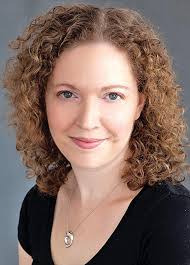
Natalie S. Harnett

The Hollow Ground by Natalie S. Harnett presents several views of hell. The hell of craving to be loved in ways your relatives cannot manage. The hell of struggling to get by economically as hopes and options dwindle to nothing. Most of all, the hell of living in a plundered landscape where mining companies have gouged the ground hollow and made the earth’s thin crust rage with sink holes, poison gases and underground fires that cannot be extinguished.

The novel’s narrator, Brigid Howley, is eleven years old, going on forty. In her matter-of-fact way, she tells us about her life and that of her family, a white Irish-American clan in the Pennsylvania coal country that she believes has been cursed for generations either by a priest’s malediction or by their own bad choices and worse luck.

Sinkholes and secrets

Brigid’s beloved father, a miner like all the men in his family, was injured years ago in a mysterious mining disaster that took the life of his brother. Brigid also has a beautiful, prickly mother and a baby brother. In 1961, the family is living with a great-aunt until a sinkhole sucks her under and turns her house uninhabitable.

The Howleys have to move in with Daddy’s mother and father in the even more bleak and ecologically devastated town of Barrendale. There Brigid makes a best friend and discovers the body of a murdered man, a crime that brings to light all the secrets, blame, guilt and longing that have roiled under the surface of her family for years.

Upending my expectations

The Hollow Ground upended all of my expectations. Before I opened the novel I had just finished a powerful book that still had me slightly under its spell, so I expected to read a good bit of The Hollow Ground before it fully won my interest. Nope. By the time I had read the prologue – less than a page long – I was utterly absorbed.

The prologue begins, “We walk on fire or air, so Daddy liked to say,” and ends with this: “I’m just saying that sometimes what we seek is something we hope, with all our blood and bone, we’ll never find.” Who can resist such an opening?

I generally don’t like child narrators, and expected Brigid to be equally problematic, either too cute or preternaturally wise. She is neither. Brigid Howley is a unique character with an original narrative voice that is brushed with rough poetry. In fact, every character in the novel – from the members of the Howley family to the women who work in the mill with Brigid’s mother to the detective who investigates the murder – is clear-cut, full-bodied and memorable.

A monstrous crime

But the star of the novel is the earth, exploited and abused by the coal companies until it no longer resembles the planet we know. “Steaming green lawns in the dead of winter.” A character “would talk about which part of her basement was too hot to touch and how many tomatoes had ripened in what should have been the frostbitten ground in her garden.” To me, the murder mystery that creates one strand of the novel shrinks to insignificance in the face of the monstrous crime committed by the coal companies against the land and all the families who live on it.

Most striking was the way the characters and their entire communities take the devastation in stride. When they learn that an inspector needs to test the air in each house in the middle of every night so they don’t suffocate in their sleep, the local families simply leave the door unlocked for him. “They [the coal companies] don’t care how many houses and families they wreck,” Brigid’s grandmother declares, “as long as they get every last flake of coal down to the bedrock.”

Unforgettable

This is a novel that creates an unforgettable world teeming with full-bodied characters. Each page rewards the reader with some new insight, character revelation or bit of fresh, distinctive language. Once you read it, you won’t be surprised to learn that The Hollow Ground, published in 2014, won both the John Gardner Fiction Book Award and the Appalachian Book of the Year Award for Fiction.

Get a free copy of The Hollow Ground

The paperback edition of The Hollow Ground was just published in August. I’m happy to have a copy to give away. There are two ways to toss your name in the hat to win a copy.

You can contact me through this blog and let me know you’d like a copy.

Or better yet, you can sign up for my newsletter to be eligible to win this and other free books by women writers.  When you receive the newsletter, just hit reply and tell me which book you want.

I’ll choose a name from those who contact me. (Sorry, I can only ship to U.S. addresses.) I hope you will appreciate this new voice in literature and look forward, as I do, to future books by Natalie S. Harnett.

Hollow Ground cover

30 Women Novelists You Should Know – #27 Stephanie Feldman

Photo: Theday.com

Photo: Theday.com

The Angel of Losses by Stephanie Feldman is a wonderful novel – beautifully written, engaging and surprising. It’s also full of wonders: miracles, myths and mysteries.

Marjorie and Holly were as close as two sisters could be. They adored their grandfather, who lived with them and told them enthralling stories about the White Wizard and an angel, even though he sometimes got angry when they asked too many questions. Both girls were heartbroken when he died.

Things turn strange

But by the time we meet Marjorie and Holly, things have changed. Marjorie is a Ph.D. student researching the ancient anti-Semitic legend of the Wandering Jew, and spending more time in the library than with her family or friends.

Although they were raised as  Christians, Holly has converted to Judaism, changed her name to Chava, and married into an ultra-Orthodox splinter community with mystical beliefs so strange even other ultra-Orthodox groups look askance at them. Marjorie and Holly (she refuses to call her sister Chava) have barely spoken in months.

Then Marjorie finds one of her grandfather’s notebooks – which he had begged his son to destroy after his death – and discovers something shocking. Her grandfather has written down all the tales he used to tell about the White Wizard, but in the notebook the magical man is the White Rebbe, a rabbi who has been blessed with the power to perform miracles and cursed with immortality.

A survivor bearing a dreadful secret

What’s more, Marjorie realizes that her beloved grandfather had been lying to her all along. He was Jewish, it turns out, a survivor of the Holocaust bearing a dreadful secret. He was also the carrier of a legacy so powerful and mysterious it will take all of Marjorie’s strength and intellect to track down the truth and protect her family – particularly Holly’s newborn son.

“He’s coming for me,” Marjorie’s grandfather tells her in what she hopes is a dream. “And then he’s coming for you.”

Ancient mysteries and present dangers

But who is “he” – the White Rebbe? The Angel of Losses that the Rebbe must confront? The mysterious old man who seems to follow Marjorie everywhere and dole out tiny fragments of the story she’s so desperate to understand? And what do any of these ancient mysteries have to do with Marjorie and Holly? The only thing that’s clear is that Marjorie must figure it out, because the life of her infant nephew is at stake.

“A breathtakingly accomplished debut”

Ellah Allfrey of NPR Books called The Angel of Losses a “breathtakingly accomplished debut,” and I couldn’t agree more. The book sparkles with sharp, fresh images and gorgeous writing.

For a novel about angels, miracles and Jewish history from the medieval era through the Holocaust to modern-day New York City, The Angel of Losses is as suspenseful as any mystery story. You don’t need to be Jewish to enjoy and appreciate the novel. Everything you need to know is in the book, along with a healthy dose of wonder.

“I still believe that writing is most exciting when it’s an act of discovery,” Stephanie Feldman said. In that case, it must have been thrilling to write The Angel of Losses. I know it was thrilling to read.

Get a free copy of The Angel of Losses

The paperback edition of The Angel of Losses was just published a couple of weeks ago. I’m delighted to have two copies to give away.

There are two ways to toss your name in the hat to win a copy.

You can contact me through this blog and let me know you’d like a copy.

Or better yet, you can sign up for my monthly newsletter to be eligible to win this and other free books by women writers. I give away one or two each month. When you receive the newsletter, just hit reply and tell me which book you want.

I’ll choose a name from those who contact me. (Sorry, I can only ship to U.S. addresses.) I hope you will enjoy this enthralling novel as much as I did.

Angel of Losses

Are you a book nerd? A quiz

There are people who like to read. And then there are people who are truly bookish. Which are you? Take this quiz to find out.

Photo: Petr Dosek

Photo: Petr Dosek

Take the quiz

  1. Does your heart beat a little faster when you step into a bookstore or library?
  2. Do you start to feel panicky if you are waiting in line somewhere with nothing to read?
  3. Have you ever wept or lost sleep over the fate of a fictional character?
  4. Do you sometimes grieve when you finish a novel, because you have to leave those characters behind?
  5. When you go to someone’s home for the first time, do you immediately check out their books?
  6. Do you live among stacks of books that resemble a redwood forest?
  7. If you have an e-reader, does it contain more books than you could possibly read in a lifetime?
  8. Do you often have more than one book going at a time?
  9. Have you ever snuck out of a party to read for a couple of minutes?
  10. Have you ever cancelled or declined a social event so you could stay home and read?

Your score

If you answered yes to 3 or more of these questions, you are a certifiable book nerd. My condolences. It is a chronic condition and there is no cure.

But to help keep the cravings under control, you should quickly sign up for Being Bookish, my free monthly newsletter: book talk, giveaways, and other stuff that only a book nerd could love.

Sign up here. You’ll feel better.


30 Women Novelists You Should Know – #20 Mary Doria Russell

When you open a novel by Mary Doria Russell, there’s no way to prepare yourself. Her books are so vibrant, so varied, you can never know what to expect. All you can rely on is that each book will be compelling, animated by ideas and gripping plots as well as by the human hunger for connection.

Creatures of God

The Sparrow, Russell’s first novel (and my favorite), was published in 1998 and takes place in the near future. The Jesuits send into space a mission team composed of a handful of priests, a scientist, a Jewish intellectual who has just escaped a lifetime of indentured servitude, and a doctor and engineer who are married to one another. Scientists have heard music being broadcast from a distant planet, and somehow the Jesuits get the jump on international governments and send their team of linguists, artists and clerics to meet the other creatures of God. Decades later, the lone survivor of the journey, a Puerto Rican priest who speaks a dozen languages, finally tells the Church hierarchy what happened on the planet, when humans first encountered extraterrestrial beings and God broke all their hearts.

Resonance for our own time

In 2008, Russell published Dreamers of the Day, a beautifully written historical novel with deep resonance for our own time. The book is narrated by Agnes Shanklin, a Cleveland woman who has spent her life serving and obeying others. When she loses her entire family in the influenza epidemic of 1919, she decides to take a long trip to Egypt. There she falls in with such historical figure as Lawrence of Arabia, Gertrude Bell and Winston Churchill. Agnes – who informs readers that she is telling us this story from beyond the grave – is a minor observer of the Cairo Peace Conference in 1919, in which the colonial powers, notably Britain, carved up the Middle East and created a new state called Iraq. Agnes is a memorable personality, and the Middle East history is fascinating and tragic because we know how it all turns out – and we learn from this novel that it didn’t need to be that way.

Trust

If I didn’t already trust Mary Doria Russell as a writer, I would never have picked up her 2011 novel Doc – and that would have been too bad. I have no interest in Doc Holliday, Wyatt Earp, or the milieu of the American West they personify. But this book was completely engrossing, thanks to the skill and warmth of the author and her narrative voice. The real-life characters Russell presents in this deeply researched novel are nothing like the mythic characters we’ve seen in a hundred movies, and the book is all the more fascinating for that. Her latest novel, Epitaph, builds on Doc and is already collecting strong reviews although it won’t be published until March 2015.

Who is she?

So who is this protean writer? She’s a Ph.D. with degrees in cultural, social and biological anthropology. She’s written six novels, won armloads of literary awards, been nominated for a Pulitzer prize – and had an asteroid named in tribute to one of her novels, an honor few authors can claim. Right now Mary Doria Russell is working on a book about the early days of the American labor movement. I can’t wait to read it.

Photo: Jeff Rooks

Photo: Jeff Rooks

My year in books – Part 3 of 3

Each year, I share a list with brief descriptions of the books I read that year. In 2014, the book I read and re-read the most was my novel Her Own Vietnam, as I prepared it for publication. But that still left time to read 45 other books – some of which might be just right for you.

Books are listed in alphabetical order by title. An asterisk (*) indicates a book I particularly enjoyed. I’ll post the list in three parts:

I hope you’ll find some good choices for your own reading in 2015. Feel free to share this list with other book-loving friends.

NONFICTION

AWOL on the Appalachian Trail by David Miller

Enjoyable first-person account of a man who escapes the corporate cube farm and, with the support of his wife and children, strikes out to hike the full 2,168 miles of the Appalachian Trail. Although I would never undertake one, I am drawn to books about other people’s epic hikes. This one had all the standard elements: descriptions of the hike and its challenges; appreciation of nature and a life lived out of doors; colorful depictions of other hikers with their strange trail names (the author’s trail name is AWOL); a reflection years later on what the hike meant to him and his family – all well told, with solid, crisp writing.

*Bad Feminist by Roxane Gay

A collection of smart, brave, incisive and pain-tinged essays about the flammable places where race, gender and popular culture meet. Like many essay collections, this powerful book is best digested in bite-sized pieces. It will stay with you.

*Home Fires by Don Katz

At first glance I thought: 640 pages that chronicle four decades in the life of a Jewish family in America? No thanks; I have a Jewish family of my own. But the book is riveting, and illuminated much about the decades of social and political upheaval everyone my age has lived through. An interesting note about the author (whom I know slightly): he is the founder of Audible.com. He had a distinguished career as a writer before he got the idea that people would buy audiobooks over the Internet.

*In the Kingdom of Ice: The Grand and Terrible Polar Voyage of the USS Jeannette by Hampton Sides

Riveting account of an American ship that in 1879 sailed beyond the known world in search of the North Pole, and found disaster and revelation in an Arctic land few humans had ever seen. The author does a fantastic job of creating a propulsive narrative about conquest and survival by weaving in details from the crew’s journals, letters from their family members, newspaper stories, and academic theories about what lay beyond the map. He also illustrates with devastating clarity how swiftly the incursion of Americans and Europeans into indigenous Arctic communities destroyed their cultures and the environments they relied upon.

*Men We Reaped by Jesmyn Ward

What does it mean to be poor and black, to be a man or a woman, in America? In this searing and thoughtful memoir, the author of the award-winning novel Salvage the Bones revisits her growing up amidst extended family in rural Mississippi. “You need to know how we’re living and dying here,” she wrote. In her young adulthood, five young men she loved died violently, including her younger brother. The book is about their deaths, but even more about their lives and the lives of the women who bore them, raised them, loved them and buried them – a whole community trying to eke out a life beneath the crushing weight of racism and poverty.

The Old Ways by Robert Macfarlane

A British literature professor takes long walks – weeks and weeks long – across the ancient paths that traverse England, with a few side trips to Spain and the Himalayas. In precise and poetic language, Macfarlane’s thoughts wander with his feet, weaving in history, literature and personal stories that range from folklore to his own grandfather. I thoroughly enjoyed the book, particularly his descriptions of England’s chalk downs. But I could not help thinking of the wife he left behind to take care of their small children and all the responsibilities of family life while he took off on his rambling adventures.

*The Passage of Power by Robert Caro

Fascinating chronicle of Lyndon Johnson’s life during the tumultuous years 1958 through 1964, during which Johnson wielded enormous power in the Senate, reached for the Presidency with a baffling strategy guaranteed to fail, became Vice President, and gained the Presidency in a way he never expected. Oh, and he launched the War on Poverty and the most transformative civil rights policies since emancipation.

Rare and Commonplace Flowers: The Story of Elizabeth Bishop and Lota de Macedo Soares by Carmen Oliveira

A strange hybrid of a book – part novel, part biography, part undigested chunks of research about the almost 20-year romantic partnership between a Pulitzer Prize winning American poet and the brilliant, intense Brazilian aristocrat. I knew nothing about either woman or their relationship before reading the book, and now feel well versed in their chaotic history.

*The Soil will Save Us by Kristin Ohlson

I come from generations of apartment dwellers, and I don’t care about the soil. (Although I do like to eat – and breathe). But Kristin Ohlson’s sparkling writing and clear, persuasive case compelled me to care – and made me understand both the promise and the stakes of what she called “our great green hope.” Full disclosure: Kristin is a friend of mine. But I read and loved her first book, Stalking the Divine, long before I met her.

Why Be Happy When You Could be Normal? By Jeanette Winterson

Winterson’s well-written, powerful memoir of growing up in a cruel, twisted family that loved Jesus but hated everything about Jeanette that was special.


 Any suggestions?

Any ideas for great books to read next year? Suggestions welcome!

TBR 7-14