2025 My Year in Books

This was not my best year for reading. There was no shortage of great books; the shortage was in me: energy, attention, ability to tear my eyes away from the headlines. But here are a few outstanding books I enjoyed in 2025.

Read more: 2025 My Year in Books

FICTION

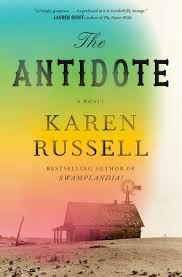
The Antidote by Karen Russell
Where do you place the things you don’t want to remember? If you live in the Great Plains of this dazzling novel, you confide them to a prairie witch—a woman who serves as a vault to hold a town’s secrets so everyone else can forget them. But one day at the height of the Dust Bowl in the farm town of Uz, Nebraska, a prairie witch called The Antidote awakens to find herself in jail and her soul empty of the secrets her clients paid her to contain. Toss in a ruinous drought, a brutal sheriff, and a serial killer on the loose, and you have a town that desperately needs a touch of magic or, even more rare, human kindness. The Antidote finds these in a teenage girl who’s a basketball whiz, a Black woman who’s photographing the Dust Bowl for FDR’s arts program, and a lonely farmer who curses his good fortune. The mix of actual historical events, magical elements, deep characterization, gorgeous, assured writing, and an astonishing true-life arc of erasure makes this a novel to think about long after you close the book.
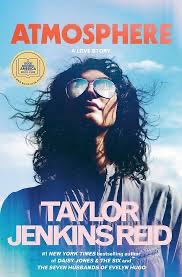
Atmosphere: A Love Story by Taylor Jenkins Reid
Thoroughly entertaining novel about two women astronauts in the early 1980s who fall in love with each other. Joan and Vanessa are among a small coterie of women scientists, surgeons, and engineers who win spots in NASA’s second group of astronauts to include women and people of color. (The real-life Sally Ride was in the first group; until then, all astronauts had to be military pilots, a job closed to women.) Joan and Vanessa go through the thrill and rigors of astronaut training and then space flight—all the while knowing their slightest misstep could doom all future women astronaut candidates, and carrying out a cosmic love story in the crippling secrecy required by the times and their government jobs.

Behind You is the Sea by Susan Muaddi Darraj
Imagine a mosaic made of beautiful pieces of colored glass, some of them chipped, and you have a sense of this novel. In nine chapters with alternating points of view, each of which works as a standalone short story, the author creates three interconnected Palestinian American families who live in and around Baltimore today. We meet the tough lawyer who is a hero to her clients and a failure to her mother; the dutiful son who escorts the body of his angry, estranged father back to a homeland the son has never visited; the fully American grandchildren, the homesick immigrant grandparents, and the generation stretched between them, all of them pulled by the gravity of their traditions and the demands of their new land. And then a young woman in a Palestinian village is murdered by her father and brothers, and this “honor killing” casts its long shadow all the way to Baltimore. (Recommended to me by Martha Toll)
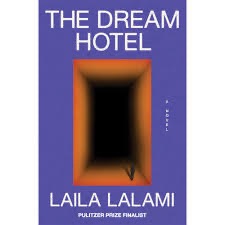
The Dream Hotel by Laila Lalami
This near-future novel is, unfortunately, a book for our time. Sara Hussein is a museum archivist, a mother, a wife, and an insomniac. She tries a brain implant to help her sleep; it works, but it harvests data from her dreams, and an AI algorithm concludes that she is at high risk for committing violence. In a chilling scene, she is detained at the airport—but is it because of her dreams? Her brown skin? The way she snapped at the TSA agents? Sara is sent to a detention center run by a private corporation that rents out the inmates’ labor, where she creates wary connections with other incarcerated women. No one knows what criteria determines when they can be released, and any tiny infraction of dress, demeanor, punctuality, even what or how they eat, can add time to their detention. As her incarceration lengthens, even Sara’s husband seems to lose interest in her. If she is ever to escape this netherworld, it will be up to her—but the elements that make Sara authentically “her” are the very ones the system uses to keep her locked up.
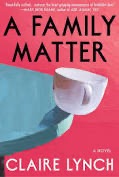
A Family Matter by Claire Lynch
Sad and lovely novel about a British family torn apart by the brutal homophobic laws of the 1980s (although it seems like the 1950s), through which lesbian mothers routinely lose custody of their children and are debased and humiliated by the courts. A young mother named Dawn falls in love with another woman and is denied all access to her beloved three-year-old daughter. The story is told from the point of view of Dawn, her husband, and their daughter—forty years later when the daughter is a mother herself and finally learns the truth about her own past. The brief sections that focus on the court case are particularly chilling, since the incredibly intrusive and insulting questions asked by the lawyers and judge are all taken from real trial transcripts of the era. A brief novel with a lingering sting.
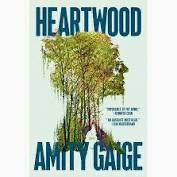
Heartwood by Amity Gaige
A middle-aged woman who’s hiking the Appalachian Trail disappears, and two other women—an experienced game warden and a retired scientist—make it their mission to find her, one by leading an arduous backwoods search and one by following scientific clues. A gripping literary novel that creates mounting tension as it explores the tangled ties between mothers and daughters and among the people we choose to call family.
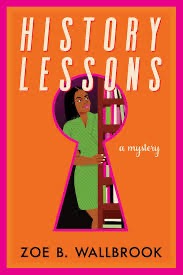
History Lessons by Zoe B. Wallbrook
Light-hearted mystery about a scholar of French history, in her first year teaching at a prestigious university, who receives an odd text from a colleague and later discovers he sent it moments before he was murdered. Daphne is used to being the only Black woman in white spaces and used to keeping secret the many strange skills she’s developed through her family’s profession, which appears to be espionage. She didn’t think she’d need those skills in the quiet academic life she’s built, but as she gets swept into solving her colleague’s murder, they just might save her life. The book had a little too much rom-com writing for my taste, but it was a fun distraction from real life.

Mrs. Palfrey at the Claremont by Elizabeth Taylor
Delightful 1971 novel about a newly widowed woman, Mrs. Palfrey, who goes to live at a residential hotel for genteel old people in London. When she falls while out on a walk, Mrs. Palfrey is rescued by a young man named Ludo, who joins her in a gentle deception for the sake of her hotel-mates: that he is her devoted grandson. In fact, he is as lonely as she is, and the relationship bolsters them both. Mrs. Palfrey and the other Claremont residents have lived through both World Wars and the death of the British Empire, so observing the upheavals of the 1960s makes them feel even older than their years. The book is stuffed with sharply drawn characters, wrapped in a narrative that is tinged with mortality and often slyly funny. (Recommended to me by Kristin Ohlson)
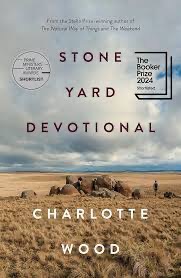
Stone Yard Devotional by Charlotte Wood
This is the book I’ve recommended the most frequently this year. An Australian woman in her 60s who works at an environmental nonprofit goes to a week-long retreat at a convent in the rural area where she grew up. She’s not religious but her despair with the world is such that she goes back to Sydney, leaves her job and her marriage and returns to the convent for good. (There’s a scene in which she unsubscribes from all her newsletters, including several I subscribe to.) Her life at the convent is basic: cooking, cleaning, gardening, learning silence and humility. They are so isolated that the pandemic doesn’t shake them much. Their peace is disrupted by three arrivals: the bones of a former nun; a visit from another former nun who left the convent to become an activist superstar but in her childhood went to school with the protagonist and was mercilessly bullied; and a plague of mice that overruns the convent and all of Australia. (The mouse infestation actually happened.) It’s a joy to read a quiet novel in which adults grapple with questions about what constitutes a good life and what we owe to one another.

More Recommended Fiction

  • 33 Place Brugmann by Alice Austen
  • After Oz by Gordon McAlpine
  • Bear by Julia Phillips
  • The Book of Form and Emptiness by Ruth Ozeki
  • The Boy in the Field by Margot Livesey
  • Bug Hollow by Michelle Huneven
  • Casualties of Truth by Lauren Francis-Sharma
  • Creation Lake by Rachel Kushner
  • Culpability by Bruce Holsinger
  • Dinosaurs by Lydia Millet
  • Fallout by Jordan Rosenfeld
  • Held by Anne Michaels
  • How High We Go in the Dark by Sequoia Nagamatsu
  • Kills Well with Others by Deanna Raybourn
  • Let Us Descend by Jesmyn West
  • May the Wolf Die by Elizabeth Heider
  • The Mighty Red by Louise Erdrich
  • Orbital: A Novel by Samantha Harvey
  • Our Woman in Moscow by Beatriz Williams
  • The Paris Express by Emma Donoghue
  • Queens of Crime by Marie Benedict
  • The Road from Belhaven by Margot Livesey
  • The Safekeep by Yael van der Wouden
  • Smoke Kings by Jahmal Mayfield
  • So Big by Edna Ferber
  • Swift River by Essie Chambers
  • Tell Me Everything by Elizabeth Strout
  • There Are Rivers in the Sky by Elif Shafak
  • Wild Dark Shore by Charlotte McConaghy

Nonfiction
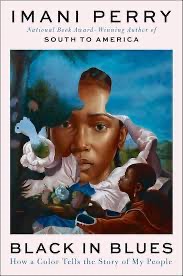
Black in Blues: How a Color Tells the Story of My People by Imani Perry
I’ve never read anything by Imani Perry that I didn’t love, and this book is no exception. It’s a swirling, almost stream-of-consciousness exploration of the color blue and its many connections to Black history, culture, politics, creativity, and spirituality. Yes, you’ll find the musical genre of the blues examined in Perry’s intimate, erudite, and protean writing style, but also blue jeans, cobalt, blue skin, and forms of blueness you never noticed or whose meaning you never understood. Perry leads us on a journey into the heart and history of this most omnipresent color.

More Recommended Nonfiction

  • 107 Days by Kamala Harris
  • The Dragon from Chicago: The Untold Story of an American Reporter in Nazi Germany by Pamela Toler
  • Everything is Tuberculosis by John Green
  • Is a River Alive? By Robert MacFarlane
  • Spell Freedom: The Underground Schools that Built the Civil Rights Movement by Elaine Weiss

What’s Next?

In less than a week it will be a new year. An election year. A year when enticing new books will be published and older books will beckon from library and bookstore shelves. Got any suggestions for what should go on my To Be Read list?

My year in books – 2016

Photo: allposters.com

Photo: allposters.com

At the end of each year, I share a list of books I’ve enjoyed that year. (The ones I wouldn’t recommend don’t make it to the list). So here’s my year in books. I hope you will find some good reads here – and that you’ll share your recommendations with me.

Continue reading

Art and outrage

The Triangle Shirtwaist Factory fire took place 104 years ago this week. It inspired grief, outrage, the birth of a union, a host of labor laws and many books, including a brilliant novel called Triangle, by Katharine Weber.

I wrote about the novel a year ago, and thought I’d share the blog post with you again during this anniversary week.

From the archives

Triangle weaves together the stories of Esther Gottesfeld, the last living survivor of the Triangle Shirtwaist factory fire of 1911; her scientist granddaughter; and a feminist researcher who asks Esther to share her memories and then listens a bit too carefully. The novel is riveting and challenging, with complex characters.

Who owns history?

Weber deftly builds both the mystery at the heart of the novel and the tense drama of the Triangle inferno. Small details that at first seem to provide only texture to the story later loom with horrifying impact.

The ending of the novel sent me racing back to the beginning with a new understanding – or at least new questions – about the plot. Triangle does not yield its insights easily, which makes it the best kind of book group selection, ripe for animated discussion.

Who owns history? The person whose story you believe.

 A tragedy and a legacy

The Triangle Shirtwaist fire was a predictable and preventable tragedy that killed 146 workers – mostly young immigrant women – at a clothing factory in New York.

Triangle fire w bodies

Dozens of the workers leaped to their deaths from the top floors of the blazing building, an image that anyone who lived through 9/11 can conjure all too easily. Even more people burned to death, many of them trapped behind locked doors in flaming workrooms. Others crawled onto rickety fire escapes that collapsed and sent them plunging to the sidewalk.

More than 350,000 people marched in the streets of New York to mourn the garment workers. Outraged by their needless and excruciating deaths, factory workers organized and won many of the workplace safety laws we take for granted today.

A story less known

A year before the Triangle Shirtwaist fire, some 20,000 women who worked in garment factories had gone on strike to demand better wages, a shorter workweek (52 hours), and specific safety measures. These working class women, many of them Yiddish-speaking immigrants, drew the support of New York’s suffragists, some of whom were women from the city’s wealthiest families.

Photo: hbo.com

Photo: hbo.com

The suffragists raised funds for the workers, bailed them out of jail, and organized mass rallies to generate public solidarity. Across the city, factories conceded to the workers’ demands, acknowledged the unions, and improved workplace safety.

Photo:: UNCPressblog

Photo:: UNCPressblog

But not the Triangle Shirtwaist factory. The two owners – Max Blanck and Isaac Harris – refused to unionize and refused to address safety concerns, including workers’ calls to leave factory doors unlocked and provide functional fire escapes.

A year later, these safety issues cost 146 people their lives. Yet they cost the factory owners nothing – in fact, the two men profited from the tragedy. While they settled lawsuits by paying family members $75 for each lost life, the owners received insurance settlements of $400 for each worker killed. The two men went on to run other factories, accumulating and ignoring citations for the very safety violations that had led to the carnage at the Triangle Shirtwaist factory.

Haunted

The lessons of the Triangle Shirtwaist Factory fire – both learned and unlearned – continue to haunt us today. A powerful novel like Triangle takes you into that world, and part of you is likely to remain there for a long, long time.

Triangle book cover

30 Women Novelists You Should Know – #20 Mary Doria Russell

When you open a novel by Mary Doria Russell, there’s no way to prepare yourself. Her books are so vibrant, so varied, you can never know what to expect. All you can rely on is that each book will be compelling, animated by ideas and gripping plots as well as by the human hunger for connection.

Creatures of God

The Sparrow, Russell’s first novel (and my favorite), was published in 1998 and takes place in the near future. The Jesuits send into space a mission team composed of a handful of priests, a scientist, a Jewish intellectual who has just escaped a lifetime of indentured servitude, and a doctor and engineer who are married to one another. Scientists have heard music being broadcast from a distant planet, and somehow the Jesuits get the jump on international governments and send their team of linguists, artists and clerics to meet the other creatures of God. Decades later, the lone survivor of the journey, a Puerto Rican priest who speaks a dozen languages, finally tells the Church hierarchy what happened on the planet, when humans first encountered extraterrestrial beings and God broke all their hearts.

Resonance for our own time

In 2008, Russell published Dreamers of the Day, a beautifully written historical novel with deep resonance for our own time. The book is narrated by Agnes Shanklin, a Cleveland woman who has spent her life serving and obeying others. When she loses her entire family in the influenza epidemic of 1919, she decides to take a long trip to Egypt. There she falls in with such historical figure as Lawrence of Arabia, Gertrude Bell and Winston Churchill. Agnes – who informs readers that she is telling us this story from beyond the grave – is a minor observer of the Cairo Peace Conference in 1919, in which the colonial powers, notably Britain, carved up the Middle East and created a new state called Iraq. Agnes is a memorable personality, and the Middle East history is fascinating and tragic because we know how it all turns out – and we learn from this novel that it didn’t need to be that way.

Trust

If I didn’t already trust Mary Doria Russell as a writer, I would never have picked up her 2011 novel Doc – and that would have been too bad. I have no interest in Doc Holliday, Wyatt Earp, or the milieu of the American West they personify. But this book was completely engrossing, thanks to the skill and warmth of the author and her narrative voice. The real-life characters Russell presents in this deeply researched novel are nothing like the mythic characters we’ve seen in a hundred movies, and the book is all the more fascinating for that. Her latest novel, Epitaph, builds on Doc and is already collecting strong reviews although it won’t be published until March 2015.

Who is she?

So who is this protean writer? She’s a Ph.D. with degrees in cultural, social and biological anthropology. She’s written six novels, won armloads of literary awards, been nominated for a Pulitzer prize – and had an asteroid named in tribute to one of her novels, an honor few authors can claim. Right now Mary Doria Russell is working on a book about the early days of the American labor movement. I can’t wait to read it.

Photo: Jeff Rooks

Photo: Jeff Rooks

30 Women Novelists You Should Know – #17 Laura McBride

As the holiday season approaches, I join all novelists in secretly wishing people across the land would awaken to find shiny copies of my book under their tree or menorah or waiting for them on the kitchen table. Hope you’ll find some inspiration for literary gifts in these posts about women novelists you should know.

“You’ve got to read this book.”

I learned about Laura McBride in the best way. A friend I trust said, “You’ve got to read this book.” The book was We Are Called to Rise, and the title alone (from an Emily Dickinson poem) would have drawn me. But I might not have stumbled across the title without my friend’s recommendation.

In We Are Called to Rise, four tragic story lines are narrated by four diverse characters: a woman whose marriage is collapsing and whose son has returned damaged from his third deployment in a war zone, a 22-year-old soldier recovering from a mysterious war wound, a middle-aged woman who advocates for children involved in court cases, and an 8-year old Albanian boy who is adapting far more swiftly than his parents to the strange world of America. All of these stories converge into one moment of hope in a gritty, sun-blasted Las Vegas no tourist will ever see.

I particularly appreciated the sections written in the point of view of Bashkim, the young boy. I often find child narrators annoying – either too cutesy or preternaturally wise. Bashkim is unusually mature and responsible, but in the way that is typical of the children of immigrants, who must serve as their parents’ translators and protectors in their new world.

The book brings the four main characters to life, with all their shortcomings and desperation, and the deep daily heroism of trying to do their best in a world where events sometimes seem to lack all meaning. Las Vegas, perhaps our country’s strangest city, also takes a star turn in this novel that is all about what is not visible on the surface.

A mature sensibility

This is Laura McBride’s first novel. She was 53 years old when it was published, and you can sense the mature mind and heart behind the text. For example, in this passage McBride takes us inside the thoughts of Avis, the woman whose son has returned from war as a frightening stranger. She grew up in poverty and chaos, and has managed to eke out a happy, stable life for herself. Now in middle age, she sees it beginning to disintegrate:

It all matters. That someone turns out the lamp, picks up the windblown wrapper, says hello to the invalid, pays at the unattended lot, listens to the repeated tale, folds the abandoned laundry, plays the game fairly, tells the story honestly, acknowledges help, gives credit, says good night, resists temptation, wipes the counter, waits at the yellow, makes the bed, tips the maid, remembers the illness, congratulates the victor, accepts the consequences, takes a stand, steps up, offers a hand, goes first, goes last, chooses the small portion, teaches the child, tends to the dying, comforts the grieving, removes the splinter, wipes the tear, directs the lost, touches the lonely, is the whole thing.

We Are Called to Rise has gotten wonderful reviews, and appeared on the published “must read” lists of such literary luminaries as Isabel Allende. But for me the most powerful inducement was my friend, telling me this was a book I could not miss.

Laura McBride