30 Women Novelists You Should Know – #21 Wendy Lee

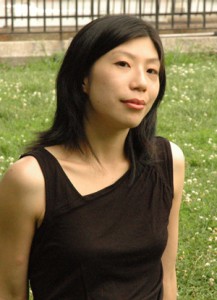
Photo: Hillery Stone

Photo: Hillery Stone

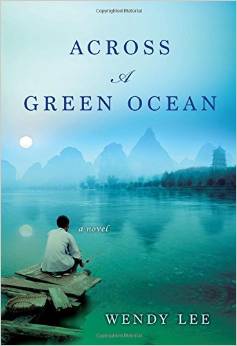
Wendy Lee’s second novel, Across a Green Ocean, starts out simple and sad. A middle-aged woman, Ling Tang, gazes out at the lawn of her suburban house, which hasn’t been mowed since her husband Han died suddenly a year ago. Like the overgrown lawn, the novel seems familiar at first, but grows more mysterious and compelling the further you explore.

Saturated in secrets

Ling Tang and her husband are Chinese immigrants who raised two American children: Emily, an over-achieving immigration lawyer married to an entitled white man, and Michael, a gay man who has not yet found his footing as an adult or come out to his family. Michael is not alone; his sister and mother have secrets too, as did his father. The Tangs are saturated in secrets, straining to love one another despite realizing they don’t know each other at all.

When Michael discovers in his late father’s papers a recent letter from a Chinese friend that says, “Everything has been forgiven,” he makes an impulsive trip to China to finally learn something about his taciturn father’s past. What he discovers cracks the deep reserve that has kept his family members isolated from one another.

A ghost on the tongue

Lee does a masterful job of presenting the reader with a pivotal moment and only later revealing its meaning. We revisit certain scenes, each time seeing it from a different character’s point of view and deepening – or completely overturning – our previous understanding of the event. The book sparkles with lovely descriptions, for example a woman sipping tea until “the bitterness became a ghost on her tongue.”

But what I enjoyed most about the novel was its depiction of life in America as an immigrant and as the child of immigrants. Ling, from Taiwan, visits other immigrant households and “recognize[d] the way people displayed English magazines… on the coffee table, while the newspapers in the kitchen were in their native languages. She understood what it meant to try too hard.” Emily says her parents “were such immigrants – putting mothballs in their closets, keeping furniture covered in plastic, refusing to drink tap water unless it had been boiled, not trusting the dishwasher to get the dishes clean.”

Across a Green Ocean is a moving depiction of people dealing with exile, isolation and the cruelly broken immigration system in the U.S. – and a set of relatives struggling at long last to become a family.

The sigh of exasperation heard round the world

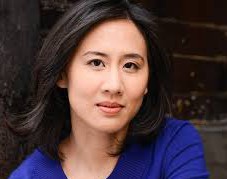
On the first day of 2015, the novelist Celeste Ng (Everything I Never Told You) published an article in Salon designed to “fix our Asian-American women writer blind spot” after being told by one conference organizer too many that, “There aren’t a lot of you out there.” Ng’s article provides a long but admittedly incomplete list of such writers, including Wendy Lee, whose first novel, Happy Family, was published in 2008. Dig in.

Want a free copy of Across a Green Ocean?

In February I’m giving away a copy of Across a Green Ocean, which was just released on January 27, 2015. For a chance to win this and other free books, sign up for my free monthly newsletter, Being Bookish.
Green Ocean


What’s your favorite quote?

Quote

I’m collecting brief quotes from women writers to use in my newsletter. Do you have any you love?

The quote doesn’t have to be about books or writing. It can be about anything – politics, relationships, movies. It can be something the writer put in a book, or a comment you overheard her saying in the laundromat.

Just a quote that made you laugh or made you think. Or both.

Got a quote in mind? Please share.

Got Canadians?

I was delighted when my friend, the Canadian poet and writer Ellen Jaffe, offered to provide me with a list of the top 10 Canadian women writers to share with blog readers.

Bigger than a baker’s dozen

The list soon grew to a dozen, then a baker’s dozen. Then she added one more. And what would a poet call a list with 14 items? A sonnet, of course.

In her list Ellen tried to represent “the whole geography and multi-cultural aspect of Canada.” She also made the interesting observation that, “As the Canadian literary community is both smaller and closer/more connected than in the U.S., most people here would have read these writers, heard them on CBC-radio, and seen or met them at conferences and workshops.”

So here, with some annotation from me, is Ellen Jaffe’s sonnet of Canadian women writers.

A sonnet of Canadian women writers

Margaret Atwood. This one is no surprise. Unlike some writers on this list, Atwood is widely published and known in the U.S. She writes novels, stories, poetry and essays, and speaks on social issues, particularly the environment. Ellen describes her as “probably Canada’s primary woman of letters today.”

Dionne Brand. Born in Trinidad, she’s a poet, novelist and essayist. She’s written two dozen books – poetry, fiction and nonfiction – and won a host of literary awards.

Dionne Brand

Dionne Brand

Sharon Butala. Born in Saskatchewan, Sharon Butala has been busy. According to her website, she has written 16 books of both fiction and nonfiction, numerous essays and articles, some poetry and five produced plays.

Lorna Crozier. One of Canada’s leading poets, she also writes the occasional prose piece. Check out her website here.

Mavis Gallant. She grew up in Quebec but lived much of her life in Paris. And what a life it was. Read about her in this New Yorker article, published shortly after her death in 2014.

Nalo Hopkinson. Born in Jamaica, she lived much of her life in Canada and now teaches in California. She writes fiction, including science fiction/fantasy, that focuses on themes of gender, racial and social justice. Here’s her website.

Joy Kogawa. Author of eight books of poetry and prose, she is best known for the novel Obasan, which is about the Japanese-Canadian experience in WWII. Her work has won literary acclaim and been honored by nations, including Japan and Canada.

Joy Kogawa

Joy Kogawa

Shaena Lambert. She’s a novelist and short story writer from British Columbia. Take a moment to browse through her website.

Margaret Laurence. Ellen Jaffe says Laurence “gave a voice to the prairies, as well as to women.” Laurence wrote eight books of fiction, five nonfiction books and four children’s books, in the process winning a slew of literary awards. One of her best-known novels, The Stone Angel, was about a 90-year-old woman. She achieved all of this during a sadly brief lifetime, as she died in 1987 at age 60.

Ann-Marie MacDonald. She’s a novelist, playwright and actor. I read and loved two of her novels, Fall on Your Knees and The Way the Crow Flies. Here’s an intriguing trailer for her latest novel, Adult Onset.

Ann-Marie MacDonald

Ann-Marie MacDonald


Lisa Moore. In this video, the novelist and short story writer from Newfoundland talks about her writing process.

Alice Munro. She is the universally acknowledged master of the craft of writing short stories, an artist of concision, and 2013 winner of the Nobel Prize in Literature. Also one of the tiny handful of Canadian writers most Americans can name.

Eden Robinson. A member of the Haisla and Heilstuk First Nations, Robinson has written three novels and one work of nonfiction. She’s known for her interrogation of the dark side of human nature.

Eden Robinson

Eden Robinson

Miriam Toews. A fiction and memoir writer who comes from a small Mennonite community in Manitoba, Toews has made a splash with her latest novel, All My Puny Sorrows. It popped up on best-of-fiction-2014 lists from Canada’s The Globe and Mail to the Boston Globe to Buzzfeed. The Washington Post’s Ron Charles, generally not a gusher, said, “In the crucible of her genius, tears and laughter are ground into some magical elixir that seems like the essence of life.” Jeez.

Oh, forget the sonnet

Let’s forget the sonnet and make this a list with 15 items. Obviously, if this were a poem it would be called a rondeau. (OK, I had to google it.)

Here’s one more Canadian woman writer we should all know.

Ellen S. Jaffe. She grew up in the U.S. but moved to Canada as a young adult and lived there ever since, becoming a Canadian citizen in 1993. Ellen has written books of poetry, a book to help writers find their way, and a book for young adults. She has edited two anthologies and her work has been included in numerous anthologies, including two focusing on older women and one that features poets – like Ellen – who came to Canada during the Vietnam War era.

Almost 20 years ago I heard Ellen read a poem about an octopus. I can still recall the feeling of being in an audience full of women writers, all of us rapt and silent, captivated by the dark power of her poetry. Browse through Ellen’s website and you’ll get a glimpse of her talent.

Ellen S. Jaffe

Ellen S. Jaffe


30 Women Novelists You Should Know – #19 Celeste Ng

Still looking for holiday gifts? Consider a book. Maybe this one.

Starts with a jolt

At first I resisted reading Celeste Ng’s debut novel, Everything I Never Told You. I felt I had read enough “missing child” novels over the past few years. That would have been a mistake.

The book starts with a jolt: “Lydia is dead. But they don’t know this yet.” The novel is indeed about the aftershocks that shake a family and a community when a child vanishes. But this book is different from the others: Lydia was missing long before she disappeared.

Unwanted things

Her mother is a white woman who yearned to be a doctor but ended up a dutiful and despairing wife and mother. Lydia’s Chinese-born father is a college professor who specializes in studying that ultra-American icon, the cowboy.

Lydia is the favored child, so obviously the focus of her parents’ love and ambition that her younger brother and sister get little attention from their parents. Indeed, the parents create a room for the unplanned youngest child, Hannah, in the attic “with the unwanted things,” and sometimes briefly forget about her.

Spooky narrative voice

We learn about the story in bits and pieces, from the distinctive perspectives of several characters. The narrative voice itself has its own spooky character, telling us at one point that Lydia’s mother is wrong about her belief that the local lake is shallow.

In a book about the strictures of race, gender, identity and the meaning of family, I was particularly intrigued by the characters who hover at the outer edges of the fractured Lee family. Hannah Lee is a fascinating character, a child so isolated among her siblings and parents that she is shocked and thrilled when one of them lets her hug them instead of brushing her away. Her “body knows all the secrets of silence.” Because her relatives rarely speak to her – and this family uses words like veils – she understands more than anyone else about what is really going on.

Haunting

Some novels haunt me after I’ve finished them, and Everything I’ve Never Told You is one of those. But rarely do I wish for a sequel. In this case, I do.

Celeste Ng, please write a novel about Hannah and her adult life. I’ll wait.


30 Women Novelists You Should Know – #18 Jill McCorkle

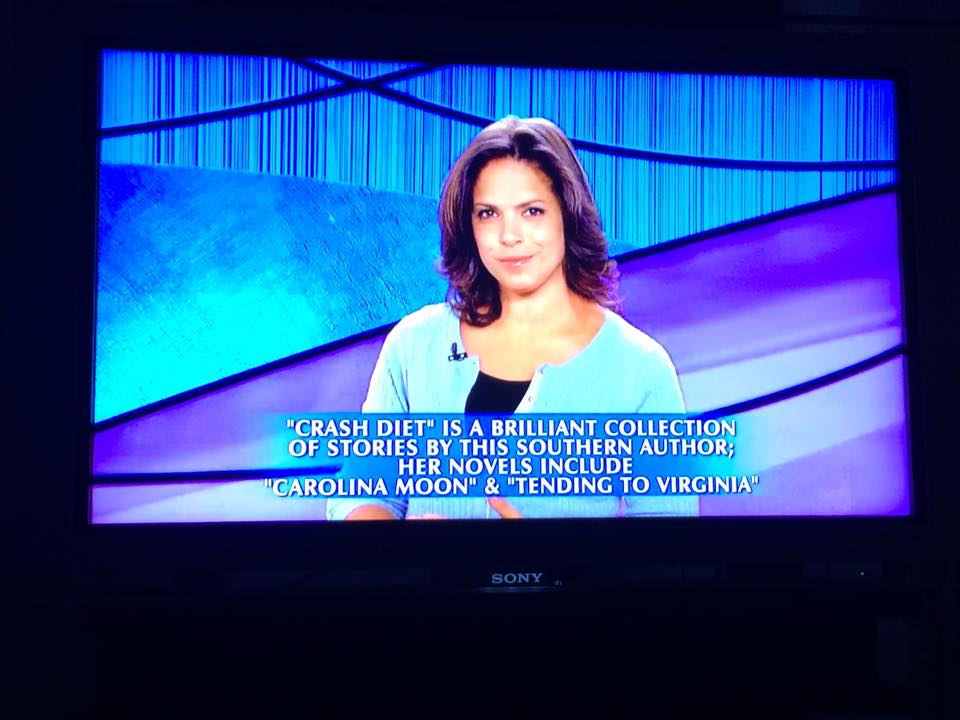
Some of the novelists I’ve been writing about in this blog are well known. Some are not as well known as they deserve to be. But not one is so famous her name can be the answer to a question on the TV show Jeopardy.

Until now.

Jeopardy - McCorkle

In addition to the two novels and one short story collection cited on Jeopardy, Jill McCorkle has written four novels and three short story collections. Much of this she drafted in bits and pieces during the shards of free time available to her during the busy years of teaching and raising her children. Picture a woman frantically scribbling in a notebook as she waits to pick up a child after school, and you are envisioning many women writers, including Jill McCorkle.

Something very odd happened

McCorkle’s most recent novel is Life After Life. When it was published in 2013, something very odd happened – another novel called Life After Life was published at the same time. That novel, written by Kate Atkinson, received tremendous acclaim, and deservedly so. But I think the shared title is a shame, because the clamor about Atkinson’s book seemed to eclipse the quiet power and beauty of McCorkle’s novel, and the book did not get the attention it should have.

Her Life After Life takes place in a retirement community in her home state of North Carolina. In McCorkle’s distinctive way the novel creates a world in which loss and laughter jostle each other in the characters’ lives and the reader’s emotions.

She makes it look easy.

Jill McCorkle’s books go down easy. They are so smooth to read, so filled with human warmth and insight, so glinting with humor that you’re taken by surprise when the books wallop you with their emotional power. That kind of writing doesn’t get noticed as much as the look-at-me virtuosity of other novelists. But in my opinion it is much more difficult to achieve.

Do you enjoy characters that are a little larger than life, and some so down-to-earth they might live next door? Do you appreciate sharp-eyed commentary about the impact of race, class and gender on our lives and relationships? Then you should read Life After Life.

Aging, loving, losing, longing – these experiences are familiar to most of us. “Most everything worth saying has already been said so the trick is to make it sound new,” McCorkle writes in Life After Life. She does.

I wish

If you’ve seen my novel Her Own Vietnam, you may have noticed a wonderful endorsement (aka blurb) from Jill McCorkle on the back cover. That may have led you to believe that we’re friends, hanging out on the porch with a bottle of wine, coming over for morning coffee in our sweatpants and fuzzy slippers.

I wish.

But I was lucky enough to meet her and share a few laughs at the Sewanee Writers’ Conference in 2002. And on the basis of that slight acquaintance so many years ago, she was generous enough to read my manuscript and provide a quote that, I believe, has opened some doors for my book. (For some insight into the blurb process, see my post Let’s Talk Blurbs.)

The human endeavor

Jill McCorkle wrote, “I think we all are like those old antenna contraptions that used to perch on rooftops, turning and turning to pick up signals in hopes of making a connection and finding clarity.” I don’t know that I’ve ever see a better description of the human endeavor.

If you too want to be charmed by her, start by reading this essay called “Cuss Time.” And then read a book by Jill McCorkle – any of her books. You’ll want to read them all.

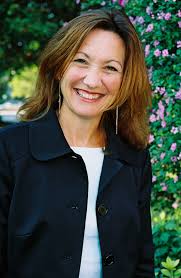
Jill McCorkle