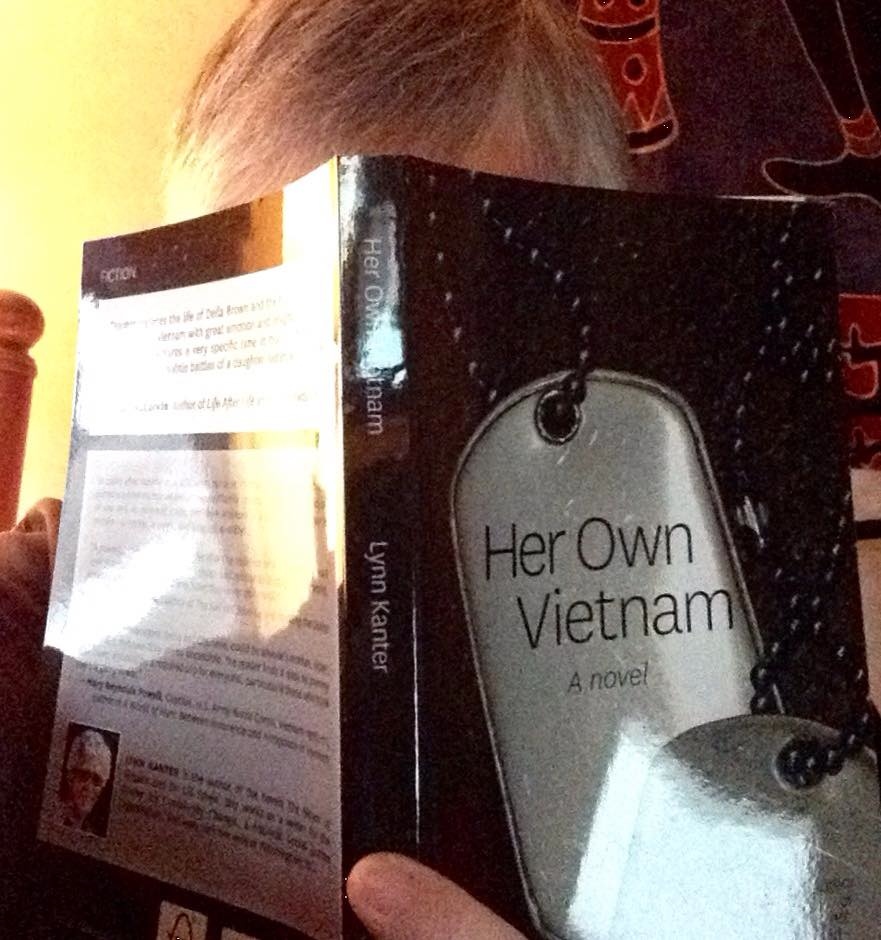
Each year, I share a list with brief descriptions of the books I read that year. In 2014, the book I read and re-read the most was my novel Her Own Vietnam, as I prepared it for publication. But that still left time to read 45 other books – some of which might be just right for you.
Books are listed in alphabetical order by title. An asterisk (*) indicates a book I particularly enjoyed. I’ll post the list in three parts:
- This post: Fiction A – L
- Fiction M – Z
- Nonfiction
I hope you’ll find some good choices for your own reading in 2015. Feel free to share this list with other book-loving friends.
FICTION A – L
A Guide for the Perplexed by Dara Horn
The novel is a roller-coaster ride that hurtles the reader from the present day to the 19th century to the 12th century, all in search of answers to compelling questions about memory, history, identity and loyalty. It sounds heady, but there is a gripping plot to propel you through the story. An American software genius has created an app that records every moment of users’ lives. She is abducted in Egypt, and her sister, always jealous of her success, must decide how – and if – to save her. And why did the Egyptians kidnap this Jewish genius? Not for the reasons you might expect. All of this is tied up, in ways both wildly imaginative and practical, with the discovery of a rare manuscript more than 100 years ago, and a book written by the 12th century rabbi and philosopher Maimonides.
*Above the East China Sea by Sarah Bird
Two teenaged girls are at the heart of this luminous and compelling novel. Okinawan daughter Tamiko Kokuba has eagerly embraced the Japanese propaganda about the crudeness of her own culture and the superiority of the “true Japanese spirit.” She learns the truth in 1945, when she and hundreds of other Okinawan girls are pressed into service in the nightmarish cave hospitals of the Japanese army. In 2014, Luz James has just moved to Kadena Air Base on Okinawa, yet another leap in the endless hopscotch of her life as the daughter of a single mom who’s a gung-ho U.S. Air Force sergeant. But this new assignment is different, because Luz’s beloved older sister has just been killed in Afghanistan, and Luz isn’t sure she wants to keep on living. Luz and Tamiko, separated by generations and cultures, are connected in ways Luz only begins to discover as she learns how to reckon with her family’s history and the long shadow of empire. Note the unexpected change in the narrative point of view toward the end of the novel.
All the Birds, Singing by Evie Wyld
Intensely atmospheric novel about a woman named Jake who flees a mysterious trauma in her Australian hometown and lives an almost solitary life, farming sheep on a wind-scoured British island. But her past continues to pursue her, along with some unknown menace – animal, human or hallucination? – that seems to attack her sheep and violate her home. A striking and unusual novel about a woman alone in the world.
All the Light we Cannot See by Anthony Doerr
This acclaimed novel follows the lives of a young German soldier who longs to be an engineer and a blind French girl who loves Jules Verne, as their lives intersect in surprising ways during World War II.
*Americanah by Chimamanda Ngozi Adichie
A stunning novel about two Nigerian young people who leave the country to seek a future – she in America, he in England – and the very different paths their lives take. Ifemelu, who tries her luck in America, is a striking character – smart, lively, bold, yet almost broken by the frustration, powerlessness and hardship of immigrant life in America, even for an educated English speaker like herself. (Her aunt, a doctor in Nigeria, fares even worse.) Through her provocative and popular blog, Ifemelu becomes an analyst and observer of race in America for the non-American black. Themes of race, gender, power, immigration and empire lace through this compelling novel, which deserves all the accolades it has received.
The Assassination of Margaret Thatcher by Hilary Mantel
A collection of sharp, witty, unsettling short stories by a master writer. Never has England seemed more like a foreign country to me.
Bad Marie by Marcy Dermansky
A fun, light book about a woman who is largely amoral, exempt from guilt or regret – or at least trying to be – and who screws up her life in magnificent ways within three weeks of being released from prison. Marie finds it’s hard to grow up when your best friend is two years old and every wrong turn brings you closer to your favorite things in life, including whisky and chocolate pudding. Underneath the wit, sly messages peek out about privilege, art and the difficulties of finding or recognizing love.
Canada by Richard Ford
The parents of two teenagers in Montana inexplicably decide to rob a bank in North Dakota. They are caught, of course, and imprisoned. The teenage girl, more resourceful than her brother, runs away, and a friend of the family sneaks the boy across the border into Canada to live and learn roughly with her reprobate brother. I enjoyed the novel, although there were a few plot and character developments that didn’t make sense to me.
Edge of Eternity by Ken Follett
This is the third book in a sweeping trilogy that follows five families – British, Scottish, Russian, German and American – throughout the 20th century. This novel begins after WWII and encompasses the Cold War, the creation and destruction of the Berlin Wall, the civil rights movement, the season of assassinations in America, the perfidies of the Nixon and Reagan eras, and more. Follett is a clunky writer but a fabulous storyteller.
*Egg Heaven by Robin Parks
This collection of short stories shimmers with quiet beauty, offering the reader brief, intense immersions into other people’s harrowing and astonishing lives. Nine short stories about waitresses who work in diners and customers who can barely afford to eat there. Nine living worlds created in a hardscrabble Southern California swept by gritty sea breezes. Diverse characters are connected by filaments of hope amidst all the different ways a human can hunger. The author, Robin Parks, is a long-time friend of mine. And Egg Heaven is the first book published by Shade Mountain Press, which later published my novel. So no, I won’t even pretend to objective. But I did I love this book.
*The Enchanted by Rene Denfeld
The Enchanted takes place largely in an old stone prison, inside a basement dungeon that serves as the prison’s death row. The narrator is waiting his turn to die for a crime so horrific he will not describe it. Even The Lady, the intrepid death row investigator who is the novel’s main character, walks a little faster when she passes his cell. Her job is to find evidence that will get a prisoner’s death sentence commuted to life in prison. But her current client, a murderer named York, wants to die. An unnamed investigator with her own troubled past, a fallen priest, a heartbroken warden, a clutch of death row inmates, and a narrator who is a condemned murderer and is certainly twisted if not mad – these are not the usual ingredients for a thing of beauty. And yet the novel is beautiful. Open the book anywhere at random, and you’ll find an idea, a description, a piece of dialogue that is fresh and lovely.
*Euphoria by Lily King
Euphoria is about three anthropologists in the 1930s, studying and living among tribes in Papua New Guinea. The three scientists – an American woman who has written a shocking and best-selling book about the sex lives of a tribe, her Australian husband and an English man they know only slightly – plunge into a love triangle that’s a vortex of passion, intellectual zeal, rivalry, ambition, and perhaps a dash of madness. The novel immediately creates an atmosphere of peril and strangeness. By the time I read the first five sentences, I was hooked: I had to know what had happened and what would happen next, even though I suspected it would be harrowing. And it was – harrowing, and uplifting and most of all, fascinating. The details about how anthropologists conduct their work and their lives were astounding.
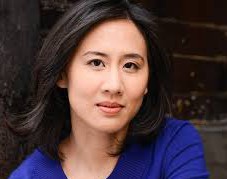
*Everything I Never Told You by Celeste Ng
I resisted this book at first because I felt I had read enough “missing child” novels over the past few years. The novel is indeed about the aftershocks that shake a family and a community when a child vanishes. But this book is different from the others: Lydia was missing long before she disappeared. Her mother is a white woman who yearned to be a doctor but ended up a dutiful and despairing wife and mother. Lydia’s Chinese-born father is a college professor who specializes in studying that ultra-American icon, the cowboy. Lydia is the favored child, so obviously the focus of her parents’ love and ambition that her younger brother and sister get little attention from their parents. We learn about the story from the distinctive perspectives of several characters. The narrative voice itself has its own spooky character, telling us at one point that Lydia’s mother is wrong when she believes the local lake is shallow. In a book about the strictures of race, gender, identity and the meaning of family, I was particularly intrigued by the youngest and most isolated daughter, Hannah. Because her relatives rarely speak to her – and this family uses words like veils – she understands more than anyone else about what is really going on.
The Free World by David Bezmozgis
In the 1970s, a Jewish family flees the USSR for – where? They’re not sure: maybe the U.S., maybe Canada. Maybe Israel. They settle in Rome while they wait for their visas to come through. Everything about this novel is interesting: the situation, the location, the back stories – but the characters, with few exceptions, make unpleasant company.
The Invention of Wings by Sue Monk Kidd
Gripping story about the lives of real-life abolitionists and feminists Sarah and Angelina Grimke. Their lives are bound to the fictional enslaved woman Hetty Grimke, who is “given” to Sarah when both girls are 11. The Grimke sisters were too radical for their South Carolina hometown, and even for the abolitionist Quakers of Philadelphia. In real life, the sisters became the most famous and reviled women in America. The novel depicts slavery from close up, surrounding the reader with its horrors.
The Lighthouse by Alison Moore
Puzzling novel about a British man taking a solitary walking vacation in Germany. The main character is distinguished only by his extreme passivity, and the book is written in a claustrophobic present tense. Clearly something deep and meta was going on during the intertwined stories of the British man on holiday and the German woman who runs the B&B where he stays – both stories featured cruel angry men, sexually predatory women, and Venus flytraps, of all things – but I didn’t catch on.
Lucky Us by Amy Bloom
You can’t go wrong with a book by Amy Bloom. Her latest novel is about two half-sisters who leave their feckless father and journey to Hollywood so the older sister can start a career in the movies. It’s the early 1940s, and naturally nothing works out as planned. Written in a breezy tone, the novel sweeps the sisters from Hollywood to Brooklyn to Long Island to London, encompassing the glamour and ruin of World War II, the myriad ways people can betray one another and shock one another with generosity, and the haphazard nature of families.
The Lowland by Jhumpa Lahiri
Two brothers who grow up in Calcutta as the closest of friends make drastically different choices in adulthood. One brother goes to America to become a scientist; the other becomes a social justice activist and is killed by the police. His murder changes the future for everyone, including his parents, his young wife, his surviving brother, and the daughter who never even hears his name until she is an adult. The book is full of jewel-like descriptions, but written in an oddly remote tone, as if purposely holding the reader at a distance.
Coming up
Tomorrow: the rest of the fiction titles. Wednesday: nonfiction.
Meanwhile, what were some of the best books you read in 2014? Please share your thoughts – and share this list with other bookish people.







 Start with a Story